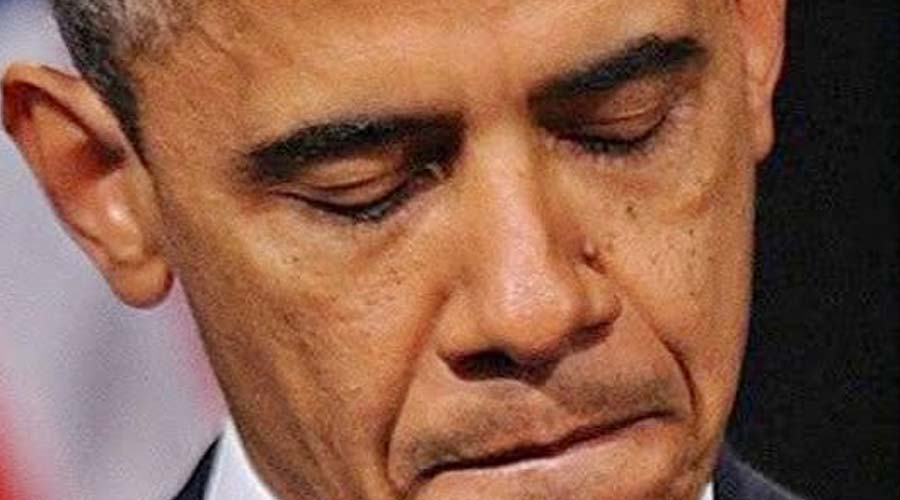
Barack Obama Broke His Silence After the Death of ….
In August 2014, America was already deeply divided.
But after the death of 18-year-old Michael Brown in Ferguson, Missouri, the tension inside the country suddenly exploded into something far bigger. Streets filled with protesters, police in military gear appeared on television screens around the world, and the United States once again found itself facing painful questions about race, police violence, and justice.
Then the entire country waited for one man to speak:
President Barack Obama.
At first, the White House moved carefully. The situation in Ferguson was rapidly escalating, emotions were raw, and every word from the president carried enormous political weight. When Obama finally addressed the tragedy publicly, millions of Americans listened closely to every sentence.
His statement was calm, emotional, and cautious at the same time.
“The death of Michael Brown is heartbreaking,” Obama said, offering condolences to Brown’s family and community. He confirmed that the Department of Justice would investigate the shooting alongside local authorities and urged Americans to respond through “reflection and understanding” instead of hatred or violence.
Those words immediately became global headlines.
For supporters, Obama sounded presidential, compassionate, and responsible during a dangerous national crisis. For critics, however, the response felt too careful and too restrained. Many activists wanted stronger condemnation of police actions and clearer acknowledgment of racial injustice in America.
And as the nights in Ferguson grew more chaotic, pressure on Obama intensified.
Television networks showed dramatic scenes of tear gas, armored vehicles, burning streets, and angry confrontations between protesters and police. The images shocked people around the world because Ferguson no longer looked like a quiet American suburb — it looked like a war zone.
Obama later returned to the issue publicly and called for “peace and calm,” emphasizing the need for transparent investigation and restraint from both protesters and law enforcement. He reminded Americans that everyone shared “common values,” including equality under the law and the right to peaceful protest.
But politically, the situation became almost impossible to navigate.
Obama faced criticism from every direction at once.
Conservatives accused him of encouraging unrest simply by speaking about racial tensions. Some right-wing commentators argued that the president’s words inflamed anger instead of calming it. At the same time, many activists on the left believed Obama was still not going far enough in confronting systemic racism and police brutality.
That tension revealed one of the hardest realities of Obama’s presidency.
As America’s first Black president, every racial crisis carried extraordinary emotional and political expectations. Millions of people looked to Obama not only as a president, but also as a symbol. Some wanted him to speak like an activist. Others expected him to remain neutral and restrained as head of state.
Trying to balance those expectations became incredibly difficult.
The crisis reached another dramatic turning point in November 2014 when a grand jury decided not to indict police officer Darren Wilson in Brown’s death. Ferguson erupted again. Fires spread through parts of the city, protests intensified, and the nation turned back to Obama for leadership.
Speaking from the White House, Obama urged protesters to remain peaceful and warned against using tragedy as “an excuse for violence.” At the same time, he acknowledged the deeper anger inside many communities and admitted that mistrust between police and Black Americans could not simply be ignored.
Perhaps the most powerful moment came when Obama openly admitted that the situation in Ferguson represented larger national problems, not just one isolated case. He called for reforms, dialogue, and efforts to rebuild trust between law enforcement and communities of color.
For many Americans, Ferguson became a defining moment of the Obama era.
The protests helped accelerate the rise of the modern Black Lives Matter movement and forced national conversations about policing, race, inequality, and justice into mainstream politics. Social media amplified every image and every speech, making Ferguson one of the most emotionally charged events of the decade.
And Obama stood directly in the center of that storm.
Years later, people still debate whether his response was strong enough, too cautious, or politically constrained by the realities of the presidency. Some believe he tried to heal a divided nation during an impossible moment. Others argue that the system itself prevented meaningful change despite his words.
But one thing is undeniable:
The death of Michael Brown changed America’s political conversation forever.

Related Posts

Prince William and Kate Middleton slammed by PETA in brutal statement over his birthday portrait
Trailblazing Feminist Author and Women’s Media Center Co-Founder, Dies at 85