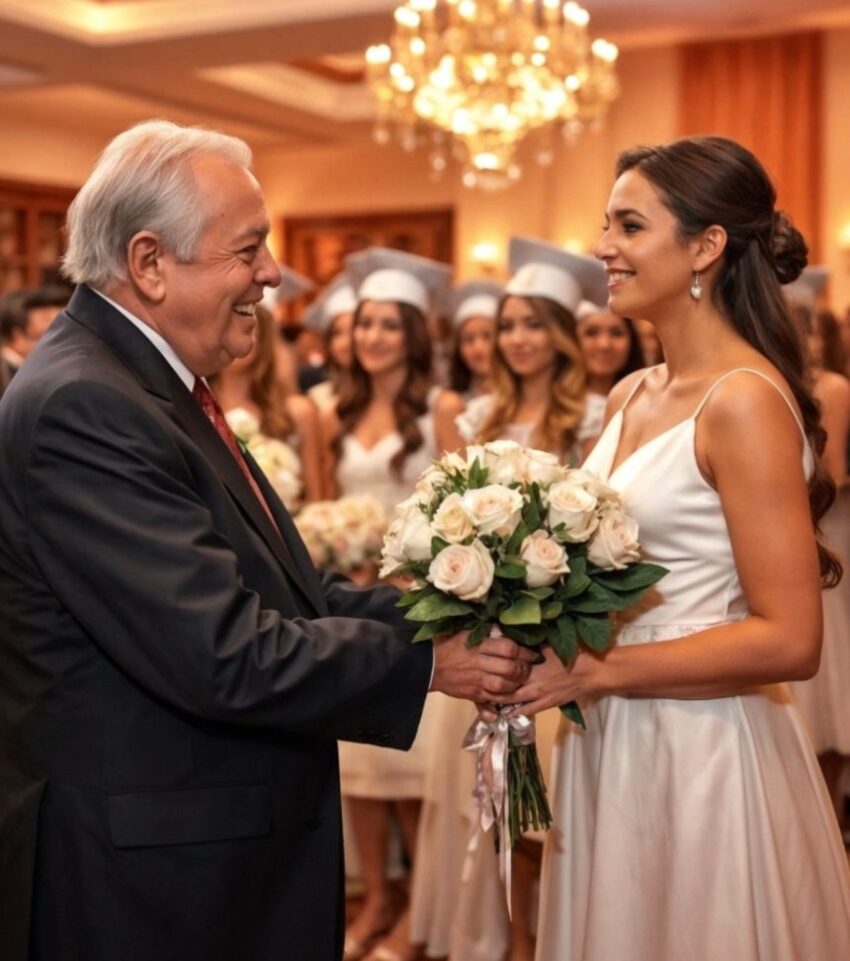
Tatiana woke up at 6:45, just like every other Monday, to the sound of her alarm.
The kitchen was filled with the smell of oatmeal — grandma was already up. Everything seemed normal: ninth grade, lessons, homework, and the occasional hangout with friends.
It felt like everything was as it should be. But deep down, things were a little different.
Since childhood, Tatiana had known one thing, repeated to her time and again: her father was a hero who died before she was born. That’s what her mother had always said. That’s what her grandma had said. And it was easy to believe. They spoke of him with reverence, telling the story with minimal detail but a particular softness in their voices, as if it were a sacred secret not to be questioned. Her father was a “real man,” someone who “left too soon,” and she — his “greatest legacy.”
This story became her armor. It was easier to live behind it. She could share it with her classmates — without shame, even with pride. Some had fathers who abused them, others whose fathers had disappeared completely, but she — had a hero, one who died for the country. In her mind, images formed, snippets from movies: a man in uniform, a fierce gaze, a final farewell to his family before battle. Fantasy blurred with reality.
After school, Tatiana often helped her grandmother — going to the store, carrying groceries. Grandma was aging, her legs often gave out. They had dinner together, at a small table. These evenings were filled with calm, but such a fragile calm that it seemed like one wrong move and everything would collapse.
And collapse, it did — suddenly.
Illness took her mother quickly. First, weakness, then pain, the ambulance, examinations. The diagnosis — cancer. A word that shatters the familiar world. Lena hid the truth as long as she could. But when it became impossible, Tatiana started taking care of her mother: holding her hand in the ward, learning to cook, running errands, calling doctors. All of this — at fourteen. Her childhood ended earlier than expected.
Her mother died quietly, almost imperceptibly — she just stopped breathing one night, when Tatiana had fallen asleep, her head resting on the edge of the bed.
After the funeral, she didn’t cry. Not immediately. It seemed like it wasn’t happening to her. That her mother had simply gone and would return any moment. In the evenings, Tatiana would catch herself waiting for familiar footsteps in the hallway. But the silence was never broken.
Her guardian became grandma. All the formalities were taken care of legally — documents, benefits, allowances. Svetlana Petrovna held herself together as best as she could. She cooked, washed, ironed, hugged. And every evening, she would repeat: