Supermodel Who Transfixed Audiences in ‘Blow-Up,’ Dies at 87
Veruschka, German Supermodel Who Transfixed Audiences in ‘Blow-Up,’ Dies at 87
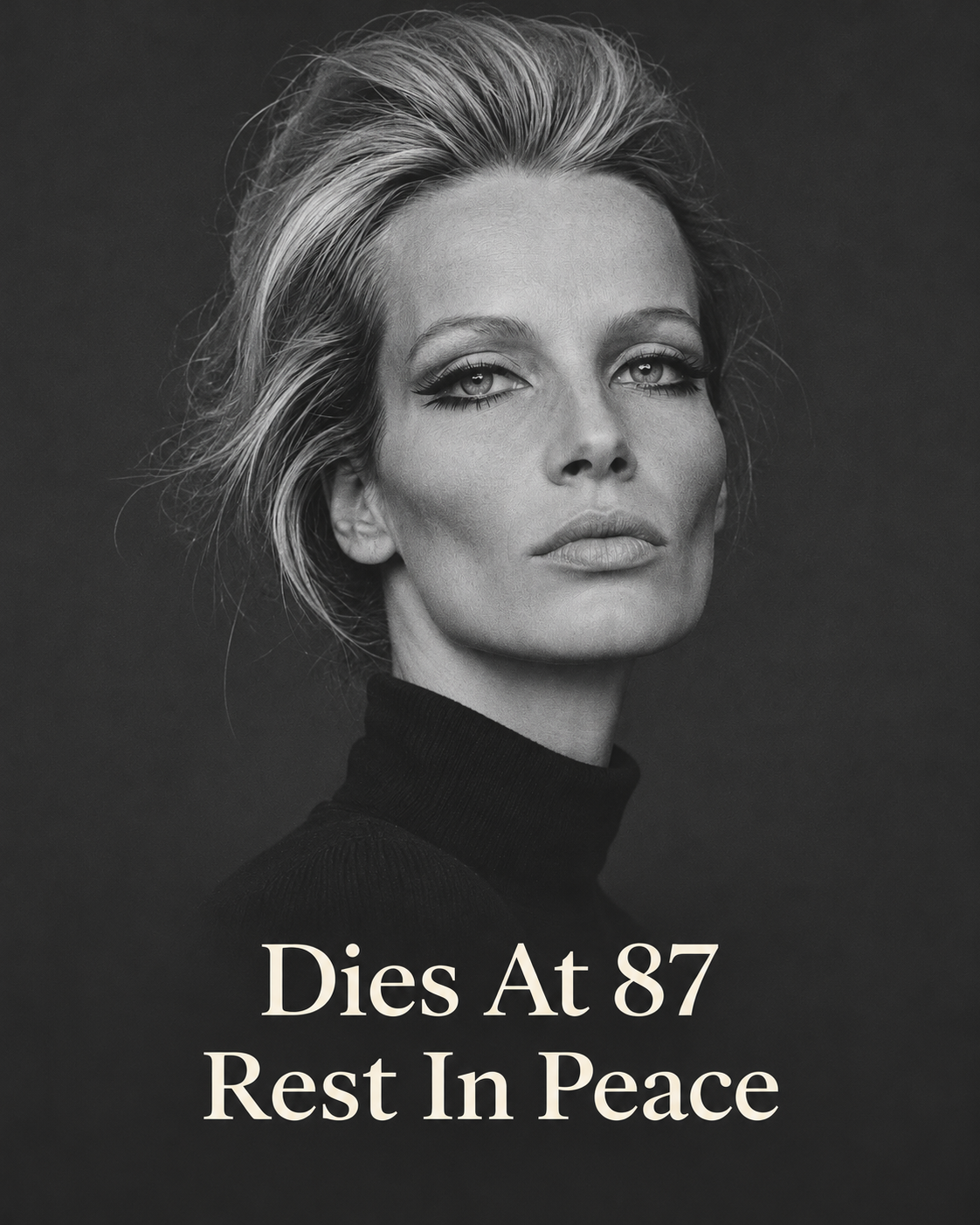
Veruschka, the German supermodel who helped define fashion photography in the 1960s and ’70s and made an unforgettable appearance in Michelangelo Antonioni’s Blow-Up, died on November 24 in Berlin. She was 87. The German news agency dpa reported her death, citing sources close to her family.
From Art Student to International Cover Star
Born Vera von Lehndorff on May 14, 1939, in Königsberg, East Prussia, now Kaliningrad, Russia, she studied painting and design in Hamburg. The Italian photographer Hugo Mulas discovered her during a stay in Italy. She began modeling in Florence and went on to work in Paris and New York, where she became one of the most recognizable models of her generation.
Her collaboration with photographer Franco Rubartelli produced some of the era’s most enduring fashion images. In one photograph for French Vogue in 1968, she wore an Yves Saint Laurent safari jacket with a lace-up front. In an earlier shoot in the Bahamas, the pair experimented with colorful makeup, feathers and sequins, exploring how body paint could transform her appearance on camera.
The Brief Scene That Made Her a Film Icon
Antonioni’s Blow-Up brought Veruschka’s presence to an audience far beyond fashion magazines. In the 1966 film, set in Swinging London, she played a version of herself opposite David Hemmings, whose character was a fashion photographer. Their photo shoot is brief, but its intensity captures the charged relationship between a photographer and his subject that runs through the film.
The Art of Disappearing in Front of the Camera
Veruschka later explored what it meant to disappear in front of the same camera that had made her famous. Working with German painter and sculptor Holger Trülzsch, she used body paint to blend into walls and natural settings. In some of their photographs, the viewer has to look closely to see where her body ends and the background begins. Her work was shown at institutions including MoMA PS1 and the Centre Pompidou.
Her work leaves behind two very different ways of looking. In Blow-Up, it is hard to take your eyes off her. In the photographs she made with Trülzsch, the pleasure is in looking long enough to find her.