My Adoptive Mother Treated My Twin Brother and Me Like a Burden for 24 Years—Then I Brought Birthday Lilies to Her Kitchen Door and Heard Her Laugh About the Lie
Part 1: The Lilies on the Passenger Seat
The lilies were still wrapped in cellophane when I heard my adoptive mother laugh about the lie she had told me my whole life.
But the laugh came later. First there was the drive, the flowers, and a stubborn hope I should have outgrown years ago.
The white lilies rode on the passenger seat of my Honda like a quiet passenger who had agreed to come along. Every time I took a curve, they slid an inch toward the door, and every time I reached over and straightened them.
It was a Saturday in late October, just past two o’clock. The maple trees along Route 9 had turned the color of rust, and the road to Gwendolyn’s house in Eau Claire felt longer than it had any right to be.
My brother had not wanted me to go.
“You’re seriously driving over there?” Grant had said that morning, leaning against the doorframe of my apartment with a coffee in his hand. “On her birthday?”
“She’s sixty today, Grant.”
“She’s sixty and she still sends us a Christmas card signed ‘G. Whitlock.’ Like we’re her dentist.”
“She’s the woman who adopted us,” I said. “That has to count for something.”
He didn’t argue. He only gave me the look he had been giving me since we were seven, the one that said I was a fool but that he would be right there when it fell apart. Then he handed me the wrapped box I’d bought, a silk scarf the color of a robin’s egg, and said, “Text me when you’re out. Don’t stay for the speech.”
I parked at the curb in front of the narrow white house with the green shutters. The lawn was cut in perfect stripes, as always, and the porch light was on even in daylight, as always. Gwendolyn had never in her life wasted a bulb, and she had never in her life turned one off.
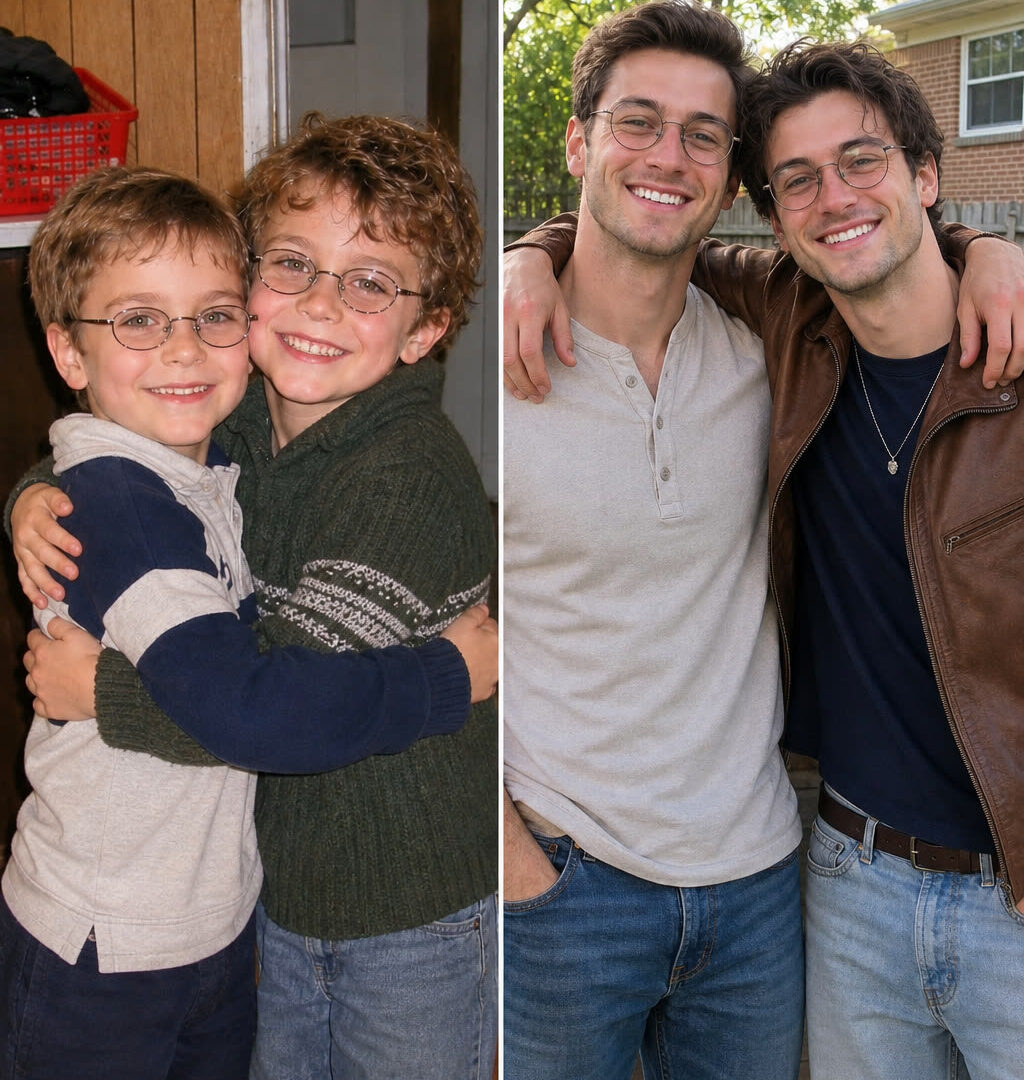
Grant and I were twins, and we were three years old when Gwendolyn and Raymond Whitlock took us in. That was the story, anyway. Our mother, we were told, had walked out one winter night and never returned, and the Whitlocks, being decent people, had stepped in.
Raymond made that story bearable. He was a big, slow-talking man who worked as a surveyor for the county, and he smelled like sawdust and peppermint. He sat in the front row at every school concert and clapped so hard the other parents turned around.
“You boys are my whole world,” he used to say, tucking us in. “Don’t you ever forget it.”
Then there was Gwendolyn.
“You should be grateful that we even took you in!” she would say whenever a sock was left on the stairs or a cereal bowl sat in the sink. “Don’t forget, you’d be rotting in some state home if it weren’t for us!”
Grant learned to go quiet. He would stare at the table, his jaw tight, and wait for the storm to pass. I learned to apologize, quickly and often, before she could finish the sentence.
When we were ten, Raymond went out to the garage on a Tuesday morning to look for a level, and he never came back in. After the funeral, the house changed in a way I couldn’t explain then and can barely explain now. It was as though someone had turned the color down.
The birthday cakes stopped. The Christmas presents shrank to one practical item each, usually socks. The front row at the middle school band concert stayed empty, and Grant and I learned to look at the stage instead of the seats.
When we graduated from high school, I asked her to come.
“You’re eighteen now, Wesley,” she said, not looking up from her crossword. “You’re not my responsibility anymore.”
“It’s one afternoon, Gwendolyn.”
She filled in a seven-letter word. “I have a hair appointment.”
We went without her. Grant sat in the folding chair beside me and told the girl behind us to stop kicking his seat, and when they called our names, we walked across the stage a half step apart, the way twins do when they have been leaning on each other for so long they no longer notice.
Grant went into mechanical engineering. I went into graphic design and spent my twenties making logos for dentists, craft breweries, and one extremely ambitious pickleball league. I had a car loan, a rent check that ate half my paycheck, and a student debt balance I tried not to look at on Sundays.
Gwendolyn called twice a year, maybe three. Each call was a quiet inventory of everything she had given up for us: her savings, her vacations, her youth. She always ended with the same line. “I hope you remember that.”
And yet there I was, parked in front of her house with a bouquet of lilies and a silk scarf. I think I was hoping that sixty might soften her, that a number that large might finally make her tired of being angry.
“Maybe people really do change,” I told the windshield.
I climbed the porch steps with the flowers held in front of me like a shield. The front door was unlocked, which was unusual, and I eased it open with my shoulder.
I did what twenty years of habit told me to do. I stepped inside, slipped off my shoes, and set them side by side on the mat, toes against the wall, exactly the way she had taught us.
The house smelled of lemon polish and burnt sugar. A cake was cooling somewhere, and there was the thin chime of a teaspoon against china. I raised the lilies, ready to call out her name and surprise her.
Then I heard two voices drifting from the kitchen. One was Gwendolyn’s, as sharp and bright as a tin whistle.
The other belonged to an older woman, and I knew it at once. It was Grandma Opal, Gwendolyn’s mother, who had always smelled of lavender and had slipped Grant and me butterscotch candies in church when Gwendolyn wasn’t looking.
“They still don’t suspect a thing, Mother,” Gwendolyn said, and she was laughing. “Twenty-four years, and those two boys have believed every word I ever told them.”
Part 2: Your Nephews
I stopped so suddenly that a petal came loose from one of the lilies and drifted to the hall floor.
I pressed my back against the wall beside the kitchen doorway, where the wallpaper had been peeling at the same corner since I was nine. My heart was beating hard enough that I was sure they could hear it. I stopped breathing altogether.
“They were only little boys, Gwendolyn,” Grandma Opal said. Her voice was thin with age and something heavier than age. “You shouldn’t speak of your own nephews with such contempt.”
Nephews.
I turned the word over in my head, and it didn’t fit. Nobody had ever said it in that house. Grant and I had always been “the boys,” or “those two,” or, on her worst days, “the ones I took in.”
“Little boys grow up into trusting men,” Gwendolyn said. The metallic scrape of a knife drew across a cake pan, and a plate clinked on the counter. “They never asked one real question about the past. They never even thought to look at their own birth certificates. It all went exactly as I planned.”
“It was never meant to go as you planned.”
“Oh, Mother. Don’t start.”
I stood in the dim hallway and felt something inside me go very still, like a pond when the wind stops. It wasn’t anger yet. Anger needs somewhere to stand, and I had just lost the floor.
I thought about Grant. I thought about the way he used to flinch when the phone rang, and the way he had once told me, at nineteen, after three beers, that he sometimes felt like a guest in his own childhood.
I should have left. A smarter man would have walked back to the car, called his brother, and thought about it for an hour.
But my feet had their own plans. I stepped into the kitchen doorway with the lilies still in my hand, and for a long moment nobody noticed me.
Gwendolyn stood at the counter in her good blue cardigan, a slice of cake on a plate in front of her, a silver knife in her hand. Her bob was perfectly pressed, and she had put on her pearl-button sweater, the one she wore to church on Easter. Grandma Opal sat at the little oak table with her hands knotted in her lap, her wire glasses hanging on their chain, her eyes red around the rims.
They looked up at the same moment.
The knife stopped moving.
“Wesley,” Gwendolyn said. Her face did not change, but her voice tightened by a half step. “You’re early.”
“Your nephews,” I said.
Nobody moved. On the stove, the kettle began a thin, rising whistle that no one reached for.
“You said nephews,” I repeated. “Not ‘the boys I took in.’ Not ‘those children.’ Nephews.” My voice sounded strange to me, flat and very calm, like it belonged to someone standing a few feet away. “I’d like to know whose children Grant and I are.”
Grandma Opal made a soft sound and covered her mouth with a tissue. Her shoulders began to shake.
Gwendolyn set the knife down on the counter, slowly, with the care of a woman placing a bomb on a table. I watched her face. She was weighing it, I could see that. She was deciding whether she could laugh it off, or call me dramatic, or claim I had misheard.
Then she glanced at her mother, who was already crying, and her face closed like a door being latched.
“Take off your jacket,” she said, “and sit down.”
“I’ll stand.”
“Suit yourself.” She walked to the stove and silenced the kettle, then poured a cup of tea as if it were any other Saturday. She did not offer me one. “This is exactly why I never wanted to have this conversation.”
“What conversation?”
She turned around with the cup in both hands, and I realized she was calm. That scared me more than any shouting could have. She had been waiting for this moment for twenty-four years, and she had rehearsed it.
“Your mother,” Gwendolyn said, “was my younger sister.”
She took a sip of tea.
“Her name was Marianne.”
Part 3: The Name Nobody Said
The name dropped into the kitchen like a plate hitting a tile floor.
I had never heard it spoken in that house. Not once in twenty-four years, not on a birthday, not in a fight, not in the long silences after Raymond died. It was as though the word had been taken out of the dictionary and locked in a drawer.
“Marianne,” I said, and my tongue felt clumsy.
“She was twenty-four when she had you two,” Gwendolyn went on, in the tone of someone reading a grocery list aloud. “No husband. No steady job. Barely a high school diploma. By the time you were two, she was drinking most evenings, and she would leave you in that dingy apartment for hours while she went out.”
“Gwen,” Grandma Opal whispered.
“Raymond and I took you in because somebody had to,” Gwendolyn said. “We gave you a home. We gave you a name. I will not have anyone tell me otherwise.”
“You told us she abandoned us.”
“She did.”
“Marianne went to treatment, Gwendolyn.” Grandma Opal’s voice trembled, but it did not break. “You know she did.”
“Mother.”
“She went for eleven months, and she came home clean, and you stood on that porch and told her the court had already decided.”
A clock ticked over the stove. I had not noticed it as a child, but now every second struck like a small coin dropping into a jar.
“Decided what?” I asked.
Nobody answered, so Grandma Opal did.
“When Marianne checked herself into the program, she signed temporary guardianship papers so that Gwendolyn and Raymond could look after you boys. Temporary, Wesley. Ninety days, renewable.” She wiped her eyes with the tissue. “Her treatment ran long, as treatment does. And your aunt filed for adoption while Marianne was away. She told the court that your mother could not be found.”
“She could have been found!” I heard my voice rise, and I did not try to bring it down. “She was in a facility two hours north of here!”
“The court didn’t look very hard,” Gwendolyn said, and she lifted one shoulder. “That is hardly my fault.”
I turned to her. The lilies had gone heavy in my grip, and I realized I was strangling the stems.
“Why?”
“Why what?”
“Why would you do that to your own sister?”
For the first time, something moved across her face. It wasn’t guilt. It was older and sourer than that, a thing that had been fed and watered for decades until it was as tall as she was.
“Because Marianne got everything,” she said. “She was the pretty one. She was Mother’s favorite. When Dad died, he left her the lake house, because she was the baby, and I was expected to smile about it. I did everything right. I married a good man. I kept a clean home. I went to every doctor in the state.” Her lips shook, just barely. “Raymond and I couldn’t have children.”
She said the last four words as though they were a bill someone had refused to pay.
“And Marianne got pregnant by accident,” she said, “and she hardly even seemed to care.”
“So you took us.”
“I took what was owed to me.”
The room tilted. I put one hand on the doorframe, and my fingers found the same chipped spot of paint they had found a thousand times as a boy.
All those years of dishes in the sink. All those speeches about gratitude. All those nights I had lain in the top bunk, apologizing in my head for a crime I could never name.
I thought of Raymond in the front row, clapping with his big hands.
“Raymond,” I said. “Did he know?”
Gwendolyn’s mouth thinned. “Raymond believed what I told him.”
“Raymond loved us.”
“Raymond was a soft man.” She lifted her chin. “When you boys turned ten, he wanted to tell you everything. He had a speech written out on a yellow legal pad. He had a heart attack in the garage the week before he could give it.”
Grandma Opal let out a small, broken noise and bent forward over the table.
I looked at the woman I had brought lilies to. For twenty-four years she had told two little boys to be grateful, and I understood something very simple then. She did not think she was the villain. In her version of events, she was the one who had been wronged. She always had been.
“I’m leaving,” I said.
“You’re being dramatic.”
“Where is she?”
“I wouldn’t know.”
“Gwendolyn.” Grandma Opal pushed herself up from the table with one hand braced on the oak. She was eighty-four years old, and I had never once heard her raise her voice. “Tell him where she is, or I will.”
“Mother, sit down.”
“No.” Her chin trembled, but her eyes were fierce and wet. “I let you do this once. I stood in a courthouse hallway and said nothing at all. I will not do it twice.”
She turned to me, and I saw a hundred small kindnesses in her face, and also a hundred silences.
“She lives in Duluth, Wesley. She runs a small bakery on Fourth Street. She has been sober for twelve years.” Her breath caught. “And every year, on your birthday, she mails you boys a card in care of this address.”
“Cards,” I said.
Grandma Opal looked at her daughter. Gwendolyn, for the first time that afternoon, looked away.
“There is a shoebox,” Grandma Opal said quietly, “in the hall closet. The top shelf, behind the winter blankets.”

Part 4: A Shoebox and a Bag of Flour
I don’t remember walking to the hall closet. I remember reaching up past the folded quilts, and the dry feel of cardboard under my fingertips, and how light the box was for something that had held so much.
I carried it into the hallway and lifted the lid.
Envelopes. Dozens of them, stacked on their edges like files in a drawer, every one addressed in the same looping blue handwriting. To Wesley and Grant. Not one had been opened. The oldest ones had faded to a soft pink, their postmarks smudged with age, the stamps curling at the corners.
I stood there with twenty-four years of birthdays in my hands, and I began to shake.
“Put those back,” Gwendolyn said from the kitchen.
I didn’t turn around.
“Put them back, Wesley. They came to my house. They’re mine.”
“They came to my name,” I said.
I put on my shoes. My fingers were clumsy with the laces, and I had to start the knot twice. I left the lilies on the hall table, still in their cellophane, next to the little brass bowl where Raymond used to drop his keys. Then I carried the shoebox out the front door and into the thin October sunshine.
I sat in the car for a long time without starting the engine. Across the street, a boy on a bicycle rode in lazy circles in the cul-de-sac, and the sound of his tires on the asphalt seemed to come from another world.
Then I called my brother.
Grant didn’t say a word for a long time that evening.
We sat at his kitchen table in the apartment across town, the shoebox between us, a pot of coffee going cold. I had read the first letter aloud, and my voice had cracked on the second line, and then I had stopped, because I couldn’t make it to the end.
Dear Wesley and Grant, it began. Today you are four. I hope someone made you a cake with candles. I hope you have a bicycle. I am getting better, and I think about you every single hour. I am so sorry that I am not there. Please know that I am trying to come home.
Grant picked up the next envelope, then the one after, then another. He read in silence, his jaw working, his glasses sliding down his nose, until he reached one postmarked the year we turned fourteen.
I called the house today. Your aunt told me you did not want to speak to me. If that is true, I will respect it. But if she is lying, boys, I need you to know that I will never stop writing.
He laid it down on the table very gently, as if it might bruise. He pressed the heels of both hands against his eyes.
“She never stopped,” he said, in a voice I barely knew.
“No.”
“I told myself I didn’t care.” He let out a short, cracked laugh. “I told myself that so many times I started to believe it.”
“I know.”
“Twenty-four years, Wes.”
“I know.”
He lowered his hands. His eyes were red, and for a moment he looked like the quiet kid who used to sit on the bottom bunk with a flashlight so I wouldn’t be afraid of the dark.
“We’re going to Duluth,” he said.
“Tomorrow?”
“Tonight, if you’ll drive.”
I drove. The highway unrolled through the dark, a long gray ribbon dotted with truck stops and sleeping farms. Grant held the shoebox in his lap the whole way, with both hands on the lid, as though it might spill.
Somewhere past Hinckley he said, “What if she doesn’t want to see us?”
“Then we’ll have asked.”
“And what if she does?”
I didn’t have an answer for that one.
We found a motel off the interstate a little after midnight and lay on two sagging beds without speaking. Neither of us slept. At some point I heard Grant turn on the bathroom light and sit on the edge of the tub, reading letters in the white glare, and I let him.
At nine the next morning we stood on Fourth Street in front of a small brick storefront with a hand-painted sign. MARIANNE’S BAKERY, it said, in cheerful blue letters. A cardboard clock in the window read Back in ten minutes.
The air smelled of yeast and cinnamon and cold lake wind. Grant shoved his hands in the pockets of his field jacket, and I realized we were both standing the way Raymond used to stand outside a building he was about to survey, weighing the ground.
I still had a hundred questions. None of them would form.
A woman came around the corner a few minutes later with a heavy paper sack of flour balanced on one hip. She was smaller than I had imagined. Her dark hair was pulled into a loose braid threaded with silver, and a streak of white dusted her cheek. She was frowning at a delivery receipt in her hand.
She looked up, and she saw us.
She had Grant’s gray-green eyes. She had my mouth.
The flour slipped from her arm and hit the sidewalk with a soft, heavy thump, a white cloud rising around her shoes.
She didn’t look down at it. She didn’t breathe. She only stared at the two of us as though we were something she had once dreamed so often that she no longer trusted her eyes.
“Wesley?” she whispered. Her gaze slid to my brother, and her whole face seemed to give way. “Grant?”
Part 5: The Right House
I would like to say I said something brilliant. I did not.
I crossed the sidewalk in three strides and put my arms around her, and she took hold of my jacket in both fists, as if she were afraid I might dissolve in the cold. She was shaking. So was I. Behind me I heard my brother begin to cry, a rough, helpless sound I hadn’t heard since we were ten.
“You grew up,” she said into my collar. It came out as a whisper, as though she had rehearsed it for twenty-four years and still gotten it wrong.
“Hi, Mom,” Grant said.
She made a sound I will never forget. Then she reached one hand out and pulled him in, and the three of us stood on that sidewalk in a cloud of spilled flour while a delivery truck idled at the curb and the driver politely looked the other way.
We spent the afternoon in the back room of the bakery, on three mismatched stools, with a pot of coffee and a tray of rolls nobody ate. Marianne told us the truth without once asking us to forgive her. She said she had been sick, and she had been reckless, and she had made terrible choices before she ever signed those papers.
“I’m not going to pretend I was a good mother then,” she said. “I was frightened, and I was ashamed, and I thought leaving you with Gwen was the only way to keep you safe. I thought I was borrowing time.”
“You came back,” Grant said.
“She told me it was over.” Her fingers tightened around her mug. “She said a judge had signed the papers, and that if I came near you, I’d frighten you. I believed her, because I was weak, and I wanted a reason to disappear. I fell apart for a long while after that.” She raised her eyes to ours. “But I kept writing. I didn’t know what else to do with the love.”
I had no words. I reached over and took her flour-dusted hand, and she held mine as though it were a rope.
It took months to untangle the rest.
We hired an attorney named Ms. Lindqvist, a brisk woman in her fifties with reading glasses on a beaded chain. She spent a week in the county records office and came back with her mouth set in a hard line. The adoption petition had listed Marianne’s whereabouts as unknown. The only attempt at notice was one letter mailed to an old apartment she had left years before.
“That letter was never answered,” Ms. Lindqvist said, tapping the folder, “and that was enough for a judge in a hurry.”
“Can we undo it?” Grant asked.
“You are adults now, so there’s no custody question. What you’re really asking for is accountability and, if you want it, a legal acknowledgment of what happened.” She folded her hands. “We can put the truth on the record.”
“Then let’s do that,” I said.
Gwendolyn fought it at first. She hired a lawyer of her own and sent us a three-page letter that used the word gratitude eleven times. Then her attorney read the shoebox cards, the returned mail, and the dated notes that Grandma Opal had kept tucked inside her Bible for years. She had written them in her careful hand, every one, so that someday someone would know.
Opal agreed to give a sworn statement. She sat in Ms. Lindqvist’s office in her lavender sweater, her glasses perched on her nose, and she told them everything. I believe that was what broke her daughter.
There was no dramatic courtroom scene. A judge read the file, found that the adoption had been obtained through misrepresentation, and set it aside. It was only a piece of paper, but it meant that our birth records would show the name of the woman who had actually raised us. She had done it from two hours away, in the dark, with an unopened mailbox.
Gwendolyn was ordered to repay what she had drawn from a small trust left to Marianne by their father, and to cover our legal fees. She sold the white house with the green shutters to do it. She never apologized to Grant or me. Months later, a single card arrived in my mailbox with no return address. It said, I did what I thought was right. I hope someday you understand.
I read it once and put it in the shoebox with the others. I did not write back.
I stopped waiting for her to say sorry. I stopped waiting for her to be someone else.
Grandma Opal moved in with Marianne that spring. The two of them shared the apartment above the bakery, and every Sunday Opal sat in the corner of the shop with a cup of tea and watched her youngest daughter laugh with the customers. She cried a little each time, and Marianne never once told her to stop.
One year to the day after I walked into Gwendolyn’s hallway, Grant and I sat on the back steps of the bakery, eating day-old cinnamon rolls out of a paper bag. The October wind smelled of lake water and woodsmoke.
“I keep thinking about Raymond,” I said.
“Yeah.”
“He had a whole speech planned.”
“I know.” Grant chewed for a while. “I think he’d be glad we found her.”
“I think he’d be glad you found her. I’m the one who dragged you to Duluth.”
He elbowed me in the ribs. “You carried lilies to the woman who ruined our childhood. Let’s not pretend you’re a genius.”
I laughed so hard I nearly dropped my roll.
Inside, Marianne called out that someone needed a hand with a tray, and we both stood at once, the way brothers do. She met us at the door with flour on her cheek and a tray of warm bread in her arms, and the whole kitchen glowed behind her.
“Boys,” she said. It still caught in her throat every single time. “Thank you.”
“For what?” Grant asked.
“For coming.”
I looked at her face, my mouth, his eyes, all of it stitched together into one woman I had spent twenty-four years not knowing. I understood that I had walked into the wrong house on my adoptive mother’s birthday and found the right one waiting at the end of the road.
I took the tray from her hands.
“We’re not going anywhere,” I said.
And for the first time in my life, I knew exactly which door I was walking through.
If you found out that the person who raised you had hidden your real family for years, would you ever be able to forgive them, or would you walk away for good?
Disclaimer: This story is a work of fiction inspired by real-life themes. Names, characters, places and events are fictionalized, and any resemblance to real persons is purely coincidental. Images are for illustration purposes only.