Odd detail in old Princess Diana and King Charles photo sparks fresh reaction
Then you notice their height.
Diana was just 36 when she died following a car crash in Paris on August 31, 1997. Her death came almost exactly one year after her divorce from Charles was finalized on August 28, 1996, closing a complicated chapter of royal history and cutting short a life that had only recently entered a new phase.
Decades later, fascination with Diana remains remarkably strong.
Old photographs continue circulating online, offering glimpses of everything from her glamorous public appearances and famous fashion moments to quieter scenes from her 15-year marriage to Charles, who was then Prince of Wales.
One photograph in particular has generated an intriguing question.
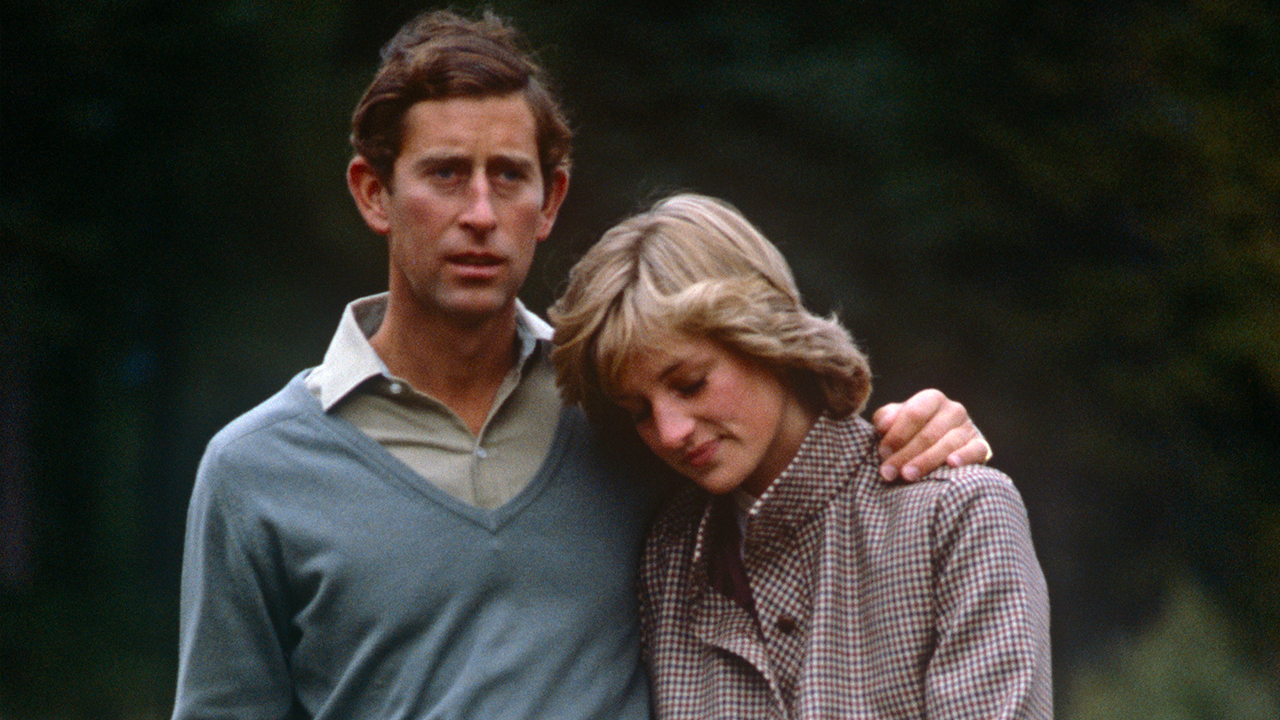
It was taken at Balmoral in Scotland in 1981, the same year Charles and Diana married.
Diana appears in a tan jacket beside Charles, who is dressed casually in a green sweater. The Scottish landscape stretches behind them as Charles places an arm around his young wife.
It looks like an affectionate royal portrait.
But look at their heads.
Charles appears significantly taller.
The top of Diana’s head seems to reach only around his eye level, creating the impression that several inches separate them.
There is just one problem with that impression.
Charles and Diana have long been widely reported as being roughly the same height — around 5 feet 10 inches, or approximately 178 centimeters.
So why does Charles look so much taller?
The Balmoral photograph is not the only image that has prompted the question.
Photographs from different stages of the couple’s relationship appear surprisingly inconsistent.
In some, Charles clearly seems to tower over Diana.
In others, particularly when the two are standing naturally beside each other, their heights appear remarkably similar.
Sometimes Diana even appears slightly taller depending on her shoes, posture and positioning.
The changing proportions eventually became the subject of discussion among royal fans online.
One Facebook video featuring photographs of Charles and Diana asked the question directly.
“Why did Princess Diana look shorter than Prince Charles even though they were the same height?”
The accompanying caption noted that both were said to stand around 178 centimeters tall, yet Diana was frequently presented in photographs as noticeably shorter.
That observation led to a much more provocative theory.
Perhaps, some suggested, the difference was not accidental.
According to that interpretation, royal photographs during the 1980s may sometimes have been composed in ways that emphasized Charles’ position as the future king.
Having the husband appear taller than his wife would also have fitted traditional expectations about masculinity, marriage and status.
“These photos were taken in the 1980s, when the royal family still adhered to the old standards,” the Facebook post claimed.
“The photographers were trying to portray the power and status of the future king by making him look taller than his wife. Diana, on the other hand, is in a more modest position.”
It is an intriguing interpretation.
And the broader issue of Charles and Diana’s apparent height difference has previously attracted academic attention.
Sociologist Lisa Wade examined photographs of the couple while discussing traditional gender expectations surrounding height.
In an essay titled “Prince Charles and the Manufacture of Men’s Superior Height,” Wade argued that Charles and Diana were often presented in ways that created or preserved the impression that Charles was taller.
“They were typically arranged so as to suggest that he was significantly taller than her, or at least to disguise the fact that he was not,” she wrote.
For Wade, however, the issue extended beyond the royal family.
She connected the photographs to a longstanding social expectation that heterosexual couples should have a taller man and shorter woman.
“One of the most unbreakable rules of mating involves height,” she wrote. “He must be taller than her, preferably significantly taller.”
Wade argued that when real couples do not conform to that familiar visual pattern, people sometimes find subtle ways of recreating it.
“This effort to make Charles appear taller is a social commitment to the idea that men are taller and women shorter,” she continued.
“When our own bodies, and our chosen mates, don’t follow this rule, sometimes we’ll go to great lengths to preserve the illusion.”
Viewed through that lens, the old royal portraits suddenly become more interesting.
Was Diana deliberately positioned lower?
Were photographers choosing angles that favored Charles?
Were the photographs simply reflecting the formal portrait conventions of their era?
Or is there a much less dramatic explanation?
The answer depends on which photograph you are looking at.
Camera angles can dramatically alter perceived height.
So can distance from the camera, uneven ground, footwear, posture and whether someone is leaning or standing completely upright.
Formal portraits add another complication because subjects are deliberately positioned rather than simply photographed as they naturally happen to stand.
Even a slight difference in placement can make two similarly sized people appear surprisingly different.
The next generation of royals provides an interesting comparison.
Prince William is considerably taller than Catherine, Princess of Wales.
William is generally reported to stand around 6 feet 3 inches, while Catherine is around 5 feet 9 inches.
That creates a genuine height difference between them.
Yet photographs do not always make that difference look identical.
Catherine’s heels can reduce the apparent gap.
Standing slightly closer to the camera can change proportions.
A tilted head or relaxed posture can make William appear shorter.
Different terrain can alter things even further.
In other words, photographs are not measuring tapes.
A single picture can create a convincing impression that disappears completely when another photograph from a slightly different angle is examined.
And that brings us back to the mysterious 1981 Balmoral portrait.
Because despite the more complicated discussion surrounding Charles and Diana’s photographs in general, the dramatic difference in that particular image has a surprisingly straightforward explanation.
Look at other photographs from the same setting.
Diana was sitting on a bench.
Charles was positioned beside her in a way that made him appear substantially taller.
The bench itself is easy to overlook because of the framing, Diana’s posture and the surrounding landscape.
Without immediately noticing that she is seated, the viewer naturally assumes that both people are standing at roughly the same level.
They were not.
Once that detail is recognized, the apparently enormous difference between them suddenly makes sense.
What initially looks like evidence of an impossible height discrepancy is largely an optical effect created by their positions.
But the larger conversation surrounding their photographs remains fascinating.
Charles and Diana were close enough in height that photographers could make the difference between them appear larger or smaller with surprisingly minor adjustments.
A pose could change it.
Shoes could change it.
Posture could change it.
Camera placement could change it.
And sitting on a barely visible bench could transform it completely.
That is one reason old photographs can be so deceptive when viewed decades later without their original context.
We tend to treat photographs as objective records of exactly what happened.
In reality, every photograph freezes one angle, one fraction of a second and one particular arrangement of people.
Change any of those elements and the story told by the image can change with them.
Perhaps that is also why photographs of Diana continue generating so much discussion.
People are still examining them decades later, searching for details they overlooked the first time.
Sometimes those details invite larger conversations about royal tradition, marriage and gender expectations.
And sometimes the explanation is much simpler.
In the famous Balmoral photograph, Charles did not suddenly become several inches taller than Diana.
Diana was simply sitting down.
Once you see the bench, the mystery hiding in plain sight becomes difficult to miss.

Related Posts
Mom Asked for an Apology After Birthday Mishap, but Guests Supported Us
We Brought Our Surrogate’s Baby Home – The First Time My Husband Bathed Her, He Screamed, ‘We Can’t Keep Her!’