My Mother-in-Law Took One Look at My Newborn Daughter and Told Us Not to Take Her Home — The Truth Behind Her Fear Changed Our Family Forever
Part 1 — The Woman I Trusted Like a Mother
Before my daughter was born, I used to think I had won the mother-in-law lottery.
Carol was nothing like the terrifying mothers-in-law people joked about online. She never criticized the way I kept my house, never questioned how Darren and I handled our marriage, and never acted as though being his mother gave her authority over every decision we made.
From the beginning, she welcomed me warmly.
Over the years, she became someone I genuinely trusted.
So when Darren and I discovered I was pregnant, Carol was almost as emotional as we were.
The moment we called to tell her, she burst into tears.
At first, I thought something was wrong.
“Carol? Are you okay?”
“I’m fine,” she managed between sobs. “I’m just so happy.”
From that day forward, she threw herself into preparing for the baby.
When the ultrasound revealed we were having a girl, Carol arrived at our house one Saturday morning wearing faded sweatpants, carrying paint rollers and enough pink paint to cover three nurseries.
She spent hours helping me.
During the final weeks of my pregnancy, she brought food almost every other day.
One afternoon, I walked into the kitchen and found her scrubbing the counters while lecturing Darren for putting her beloved cast-iron skillet into the dishwasher.
“I raised you better than this,” she said.
Darren leaned around the doorway.
“You still let me marry Claire.”
Carol glanced at me.
“That was Claire’s questionable decision, not mine.”
I laughed so hard my pregnant stomach hurt.
That was our relationship.
Easy.
Warm.
Comfortable.
Which was why nothing could have prepared me for what happened when Carol finally met our daughter.
I went into labor late one evening.
Nearly twenty exhausting hours followed.
By the time I heard my baby’s first cry, every muscle in my body felt as though it had been wrung out.
Then the nurse placed her against my chest.
Everything else disappeared.
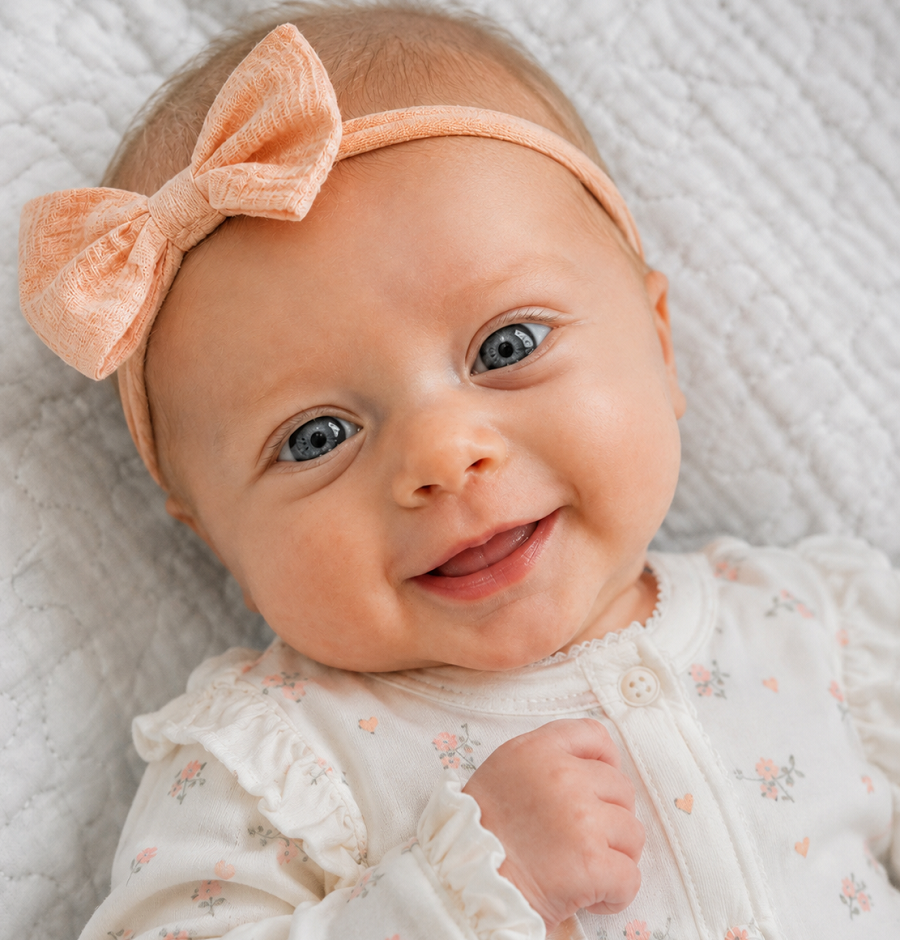
She was tiny, warm, and impossibly beautiful.
I started crying immediately.
Darren stood beside me with tears in his own eyes.
He bent down and kissed my forehead.
“She’s perfect, Claire.”
I believed him completely.
We named her Lily.
Because of hospital rules, family members couldn’t visit right away, so our first night was quiet except for nurses checking on us and Lily waking whenever I had just managed to close my eyes.
The next morning, Darren returned with flowers despite my repeated instructions not to waste money on flowers.
He lifted Lily from the bassinet and stared at her with the expression of someone who had suddenly discovered the entire universe could fit inside two arms.
Then my phone rang.
It was Carol.
“I’m heading over now,” she announced.
Her excitement made me smile.
About an hour later, the door opened.
Carol entered carrying two shopping bags and an enormous stuffed rabbit that was almost bigger than her granddaughter.
“There’s my beautiful girl!”
Her face shone as she approached the bassinet.
Then she stopped.
Just stopped.
At first, I thought she had become overwhelmed.
But then I saw her expression.
The joy disappeared.
Not gradually.
Instantly.
Her face turned pale.
And she stared at Lily as though she had just seen a ghost.
Part 2 — “You Can’t Take Her Home”
“Carol?”
She didn’t answer me.
Her eyes were fixed on Lily’s upper arm.
Lily had a small oval-shaped birthmark there, only slightly darker than the surrounding skin. None of us had thought much of it.
Carol leaned closer.
Her breathing changed.
“Did the doctors say anything about that?”
“About what?”
She pointed toward Lily.
“That mark.”
I looked at Darren.
“No,” I said slowly. “Why would they?”
Darren stepped beside his mother.
“What’s wrong with it?”
Carol looked at him.
Then at me.
Whatever she saw seemed to frighten her more.
She backed away from the bassinet.
“Carol, you’re scaring me.”
She pressed a hand against her chest.
“What I’m about to say is going to sound terrible.”
My entire body tensed.
“What are you talking about?”
She looked at Lily again.
Then she said words I will never forget.
“You shouldn’t take this baby home.”
For several seconds, I honestly wondered whether exhaustion had caused me to misunderstand her.
Darren stared at his mother.
“What did you just say?”
“You need to have her checked first.”
“Checked for what?”
“Darren, please listen to me.”
His face hardened.
“That is my daughter.”
“I know.”
“Then why are you standing there telling us we shouldn’t keep her?”
Carol shook her head frantically.
“That isn’t what I mean.”
“It’s exactly what you said.”
He stepped slightly between Carol and Lily.
I had never seen Darren look at his mother that way.
Carol pointed desperately toward Lily’s arm.
“That mark. Please. Don’t ignore it.”
“It’s a birthmark,” I said.
“I know what it looks like.”
“Then what is the problem?”
Carol’s eyes filled with tears.
“Because I’ve seen that exact mark before.”
The room went silent.
Darren stared at her.
“Where?”
Carol’s lips trembled.
She looked suddenly older than she had an hour earlier.
“There’s something I should have told you a very long time ago.”
Darren frowned.
“What?”
Carol closed her eyes for a moment.
Then she looked directly at her son.
“I didn’t give birth to you.”
I felt the air leave the room.
Darren actually laughed once, but there was no humor in it.
“What are you talking about?”
“You were born to another woman.”
“Mom, stop.”
“I’m telling you the truth.”
“No, you’re upset. Sit down.”
Carol reached for him.
Darren pulled away.
“You came to your father and me when you were only a baby,” she continued. “It started through a private arrangement. The adoption became legal afterward.”
Darren stared at her as though she had become a stranger.
“You’re telling me I’m adopted?”
Carol nodded.
His expression changed from confusion to disbelief, then disbelief to anger.
“And you never told me?”
“I wanted to.”
“When?”
“When you were older.”
Darren’s voice sharpened.
“I’m thirty-four years old.”
Carol had no response.
He shook his head.
“When exactly were you planning to decide I was old enough to know who I am?”
I reached for his hand.
His fingers were trembling.
Then he looked toward Lily.
“What does any of this have to do with my daughter?”
Carol sat down.
And finally, she explained.

Part 3 — The Secret Behind Lily’s Birthmark
“The woman who gave birth to you had that same mark.”
Darren’s face went completely still.
“What woman?”
“Her name was Ruth.”
“Who was she?”
“Someone your father and I knew about through mutual friends. She lived several states away.”
“Is she still alive?”
Carol hesitated.
“I don’t know.”
Darren stared at her.
“You don’t know?”
“I haven’t spoken to her in more than thirty years.”
His frustration exploded.
“Then why are you looking at Lily like a birthmark means something terrible?”
Carol swallowed.
“Because Ruth wasn’t the only person in her family who had one.”
My stomach tightened.
I remember wrapping the hospital blanket more securely around Lily, as if fabric could somehow protect her from whatever Carol was about to say.
“What do you mean?” I asked.
Carol folded her hands together.
“There was an inherited condition in Ruth’s family. I don’t remember its exact medical name anymore. Some relatives had marks similar to that one and never developed any health problems. But several others had a hereditary issue involving their blood vessels.”
Darren stared at her.
“You knew my biological family had a hereditary medical condition?”
Carol nodded.
Very slowly.
“And you never thought I deserved to know?”
“I kept telling myself it wasn’t relevant because you never had the mark.”
Darren looked devastated.
Not simply angry.
Betrayed.
“You decided that?”
“I was afraid.”
“Afraid of what?”
Carol’s eyes filled again.
“Losing you.”
The words should have sounded loving.
Instead, in that moment, they sounded selfish.
My heart began racing.
“So Lily could have inherited something serious from Darren’s biological family?”
“I don’t know,” Carol said quickly. “That’s why I panicked.”
Suddenly the room seemed to tilt.
My vision blurred.
“Claire?”
Darren caught my shoulder.
A nurse hurried in and lowered my bed while checking my blood pressure.
Within minutes, a doctor joined us.
He examined Lily carefully and listened as Carol repeated everything she could remember.
Thankfully, he remained calm.
“A birthmark alone does not mean your daughter has this condition,” he explained. “Right now she appears healthy and stable. Nothing here suggests an immediate emergency. But because there may be a relevant family history, we should document everything and arrange appropriate follow-up.”
Relief and fear collided inside me.
Lily was okay.
For now.
But there was a medical history we hadn’t even known existed.
Darren turned toward his mother.
“You knew there were things about my biological family that might affect my health one day.”
Carol lowered her head.
“Yes.”
“And you chose not to tell me.”
“I’m sorry.”
Darren’s voice became strangely calm.
“No. I’m not ready to hear that yet.”
Then he asked the question that changed everything again.
“How do I even know you’re telling the truth?”
Carol looked up.
“I have a photograph.”
Darren frowned.
“A photograph of what?”
“Ruth holding you shortly after you were born. Her sleeve was rolled up. You can see the mark.”
Darren gave a bitter laugh.
“You still have it?”
Carol nodded.
His eyes flashed.
“You kept a photograph of my biological mother for thirty-four years, and it never occurred to you that I might want to see it?”
“I was afraid—”
“Please stop saying that.”
Carol went quiet.
Darren pointed toward the door.
“Go get the photograph.”
She left.
Part 4 — The Woman in the Photograph
After Carol disappeared down the hallway, Darren stood silently beside the window.
I had never seen him look so lost.
Finally, he turned toward me.
“Do you believe her?”
“I don’t know.”
He rubbed both hands over his face.
“I feel like my entire life just shifted sideways.”
“I know.”
Then he looked straight at me.
“Did you know?”
The question hurt, but I understood why he needed to ask.
“No.”
He studied my face for a second before nodding.
“I had to make sure.”
“I understand.”
Carol returned later carrying an old envelope.
She placed it carefully on the bedside table.
Darren opened it.
Inside was a faded photograph.
A young woman stood outside a small house holding a newborn baby against her chest.
She had dark hair and tired eyes.
Something about her expression made my throat tighten.
She looked proud.
And frightened.
And terribly young.
But Darren barely looked at her face at first.
His attention went directly to her arm.
There it was.
A small oval birthmark.
Same general location.
Almost identical shape.
Darren stared at the picture for so long that I could hear the hospital equipment humming behind us.
Finally, he lowered himself into a chair.
Carol spoke quietly.
“I never planned for you to find out this way. When I saw Lily’s arm, it took me straight back to that photograph. I panicked.”
“You told us not to take our daughter home.”
“I know how it sounded.”
“It sounded like you believed something was wrong with her.”
“I was trying to tell you that I recognized the mark. I thought she needed to be checked before everyone dismissed it as nothing. But explaining why meant admitting what I had hidden from you.”
Darren looked down at the photograph.
“You had my entire life to tell me.”
Carol wiped her cheeks.
“I convinced myself that keeping the truth from you was protecting you.”
Darren said nothing.
Then Carol whispered the most truthful thing she had said all day.
“But I see now that I wasn’t protecting you. I was protecting myself. I was terrified that if you knew, you might stop seeing me as your mother.”
Darren remained silent.
So did I.
There was no comforting response that wouldn’t make what she had done seem smaller.
And it wasn’t small.
Two days later, Lily and I went home.
She was healthy.
She ate.
She slept.
She cried with impressive enthusiasm at three in the morning.
In every ordinary way, she was exactly the baby we had hoped for.
But nothing else felt ordinary anymore.
Lily’s doctors now knew there might be a hereditary condition worth investigating.
And Darren had discovered that the story of his own life contained an entire chapter everyone had hidden from him.
He needed answers.
So did I.
Part 5 — Finding Ruth
Carol remembered several details from the adoption.
A town.
A former address.
Ruth’s parents’ names.
Darren searched through boxes in Carol’s attic until he uncovered an old Christmas card containing a return address.
From there, with help from an older relative who remembered Ruth’s family, we eventually found her.
She was alive.
And she lived only about four hours away.
When Darren finally had her phone number, he stared at it for three days.
Every evening, I saw the same number sitting on a piece of paper beside his phone.
On the fourth night, he picked it up.
Then put it back down.
“Maybe I shouldn’t call her.”
“Why?”
He stared at the floor.
“Because I’m angry.”
“At Ruth?”
“No.”
“Then don’t let your anger at Carol decide whether you contact Ruth.”
He looked at me.
“What if meeting her makes everything worse?”
“It could.”
He raised an eyebrow.
“Very reassuring.”
“I’m not going to lie to you. Meeting her might hurt. But you don’t owe her a relationship, Darren. You don’t even owe her a second meeting. This is about whether you want answers.”
I glanced toward Lily sleeping nearby.
“And right now, those answers may include medical information for our daughter.”
The following morning, he called Ruth.
One week later, we drove to see her.
Darren surprised me by asking Carol to come with us.
“If I’m finally going to hear the truth,” he told her, “I want both of you in the room. I’m finished hearing different versions of my own life.”
The reunion wasn’t cinematic.
No one ran across a room.
There were no dramatic embraces.
Ruth opened her front door and simply stared at Darren.
Then she began to cry.
For a long moment, nobody spoke.
Finally, Ruth whispered, “You look so much like my father.”
Darren swallowed hard.
“I don’t really know what I’m supposed to say.”
“You don’t have to say anything.”
We sat around Ruth’s kitchen table.
A cardboard box was waiting there.
Inside were photographs, family documents, old medical papers, and letters.
Darren picked up one of the envelopes.
His name was written across it.
“You wrote to me?”
Ruth nodded.
“For your birthdays. For several years.”
“Why didn’t you send them?”
Ruth looked toward Carol.
“Because your parents were raising you. That was the agreement. I thought appearing in your life later because I missed you would have been unfair.”
Darren looked at Carol.
His voice was quiet.
“That should have been my decision.”
Carol nodded.
“Yes.”
For once, she didn’t defend herself.
Darren leaned back.
“I know you loved me, Mom. I’m not questioning that.”
Carol started crying.
“But loving me didn’t give you the right to decide forever what I was allowed to know about myself.”
Carol whispered, “You’re right.”
Darren didn’t rush to comfort her.
And I was glad he didn’t.
Sometimes forgiveness begins with allowing the person who caused the hurt to feel the weight of it.

Part 6 — What Lily Had Really Inherited
Eventually, Darren opened the medical records.
“What exactly happened in your family?” he asked Ruth.
Ruth explained everything she knew.
Several relatives had been monitored for an inherited vascular disorder. Some had the oval-shaped birthmark. Others didn’t. Some relatives with the mark remained completely healthy.
The birthmark was not a diagnosis.
It was simply one characteristic doctors had occasionally noticed within the family.
“If I had known you were searching for me,” Ruth told Darren, “I would have given you every medical record I had.”
Darren looked at Carol.
Carol lowered her eyes.
Then Lily made a soft sound from her carrier.
Ruth immediately turned toward her.
“May I see her?”
I lifted Lily and carried her closer.
Ruth smiled.
Then she noticed Lily’s arm.
Her expression froze.
My heart lurched.
For one terrible second, I saw the exact fear I had seen on Carol’s face in the hospital.
Then Ruth let out a small, tearful laugh.
“Of course.”
She rolled up her sleeve.
And there it was.
The same oval mark.
Darren stared at Ruth’s arm.
Then at Lily’s.
Then back again.
Something in his expression finally loosened.
“So that’s what Mom recognized.”
Ruth nodded.
“That’s what she recognized.”
Carol wiped tears from her eyes.
Later, after proper medical testing and follow-up, we finally received the news we had been praying for.
Lily showed no signs of the inherited disorder.
Her doctors would keep the family history in her medical records and remain aware of it as she grew, but the mark itself was simply a birthmark.
Nothing more.
I cried when we heard.
Darren held Lily against his chest for a long time.
The strange thing was that by then, the birthmark no longer frightened me.
It had never been the real problem.
The real problem had been silence.
Carol had possessed information that Darren had every right to know.
Information about his identity.
His biological family.
His health.
And possibly his child’s health.
For years, she had told herself secrecy was love.
But love without honesty can become control, even when it begins with good intentions.
Part 7 — Two Grandmothers and One Little Hand
The months afterward were complicated.
Darren did not forgive Carol overnight.
Some days, they spoke normally.
Other days, a conversation would circle back to the adoption, and the hurt would return.
There were arguments.
There were long silences.
There were questions Carol couldn’t answer without admitting that fear had influenced too many of her decisions.
But Darren kept talking to her.
That mattered.
Ruth didn’t suddenly become his “real mother,” either.
Darren hated that phrase.
Carol was the woman who had raised him, sat beside him when he was sick, attended school events, celebrated birthdays, and loved him through every stage of his life.
Ruth was the woman who had given birth to him, carried memories of him for thirty-four years, and preserved pieces of his biological history that he was only now discovering.
Neither relationship erased the other.
And for the first time, Darren was allowed to decide what both relationships would become.
Several months later, we invited a few relatives to our house for a small gathering.
Carol came.
So did Ruth.
It was awkward at first.
Painfully awkward.
Both women seemed unsure where to stand, what to say, or whether helping with Lily might somehow offend the other.
I watched Carol straighten napkins that didn’t need straightening.
Ruth spent an unnecessary amount of time examining the photographs on our bookshelf.
Darren noticed too.
But he said nothing.
Then Lily, sitting on a blanket in the middle of the living room, began fussing.
Carol bent down from one side.
Ruth instinctively bent down from the other.
They stopped when they noticed each other.
For one brief second, nobody moved.
Then Lily solved the problem for everyone.
She reached upward.
One tiny hand grabbed Carol’s finger.
The other grabbed Ruth’s.
Both women looked at her.
Then at each other.
Someone laughed.
I think it was me.
Then Ruth laughed.
Carol did too.
And finally, Darren smiled.
A real smile.
The kind I hadn’t seen much since the morning in the hospital.
I looked at our daughter sitting between the two women, completely unaware of the decades of love, fear, secrecy, regret, and unanswered questions surrounding her.
Then my eyes landed on the little oval mark on her arm.
The birthmark had never meant there was something wrong with Lily.
In an unexpected way, it had done the opposite.
It had revealed something our family desperately needed to know.
It uncovered medical history that might one day have mattered.
It led Darren to the woman who had given birth to him.
And it forced Carol to finally tell a truth she had been hiding for more than three decades.
I still wish she had told him sooner.
So does Darren.
Some decisions cannot be undone simply because they were made out of love.
Carol had been terrified that knowing the truth would make Darren stop seeing her as his mother.
But the secret itself almost caused the very thing she feared.
The difference now was that there were no more hidden photographs.
No more missing medical histories.
No more other people deciding what Darren was allowed to know.
The truth had been painful.
Messy.
Overwhelming.
But at least it belonged to him now.
And so did every decision about what came next.
As I watched Lily happily holding one finger from each of her grandmothers, I realized something else.
Families are rarely as simple as the stories we tell about them.
Sometimes love comes from biology.
Sometimes it comes from years of showing up.
Sometimes both are true at once.
But love never gives us ownership over another person’s truth.
And perhaps that was the greatest lesson hidden inside the tiny birthmark on my daughter’s arm.
Lily had inherited a mark from a family she didn’t yet understand.
Darren had inherited a history he had never been allowed to know.
But from that moment forward, we made one promise to each other:
Our daughter would grow up knowing where she came from.
There would be no locked boxes.
No carefully edited family stories.
No truths withheld because adults were afraid of what she might do with them.
Because sometimes the truth changes a family.
But secrecy can shape one for generations.
And when Lily was finally old enough to ask about the little oval birthmark on her arm, we would tell her the whole story.
Not as something frightening.
Not as something shameful.
But as the tiny mark that opened a door which should never have remained closed.
Note: This story is a work of fiction inspired by real events. Names, characters, and details have been altered. Any resemblance is coincidental. The author and publisher disclaim accuracy, liability, and responsibility for interpretations or reliance. All images are for illustration purposes only.

Related Posts
A Woman Went to the Port with Her Newborn Twins to Surprise Her Husband When He Returned from Sea – But She Found Him with Another Woman and Made Him Regret It
At 6, I Promised My Best Friend with Down Syndrome We’d Go to Prom Together – 12 Years Later, Mom Said I Could Go with Him Only on One Condition