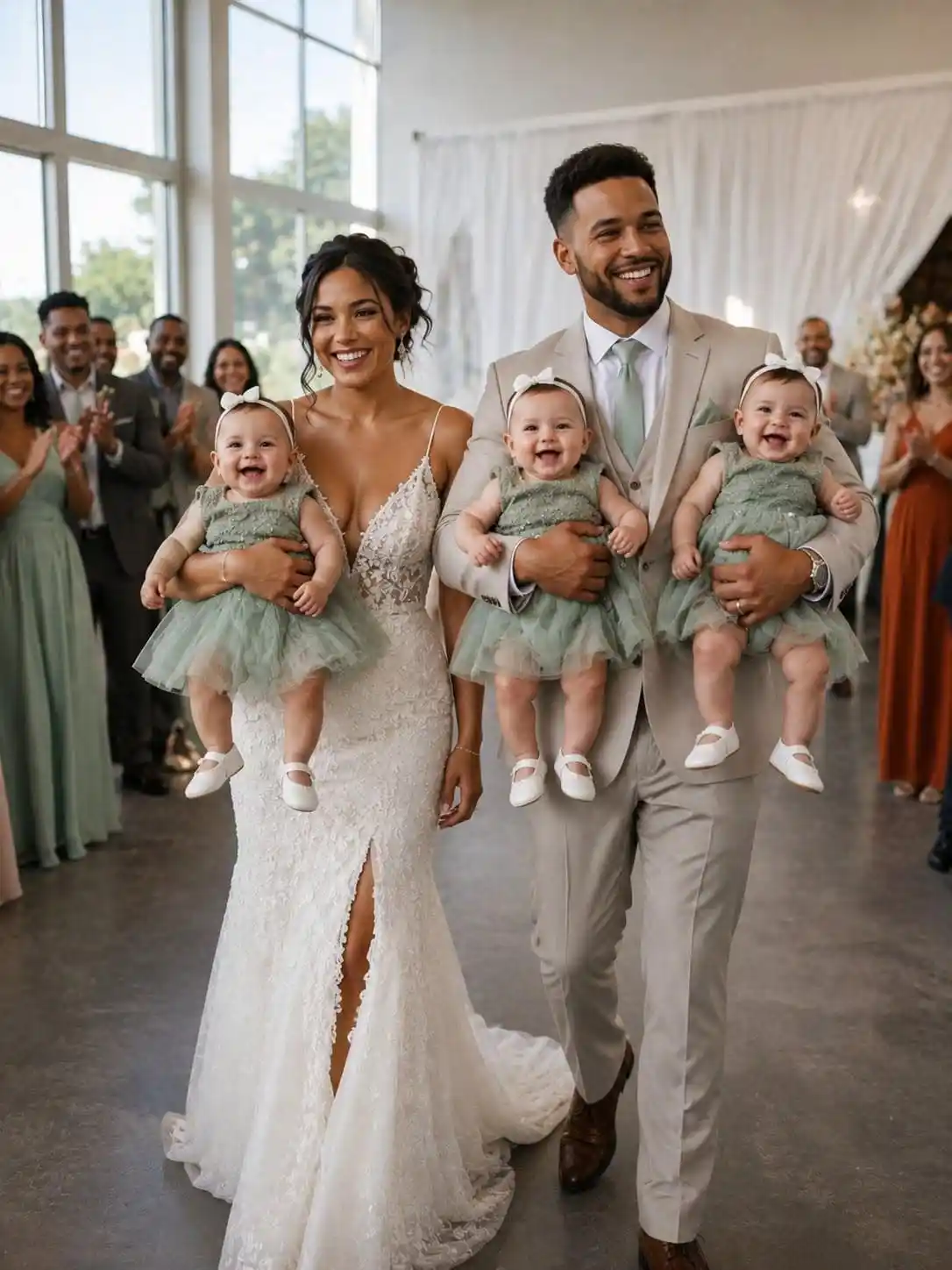
Three Baby Bassinets and an Office Key Replaced My Broken Marriage
The gray winter rain of Manhattan streaked the high windows of the executive office, turning the skyline into a blur of concrete and charcoal. On the corner of Ryan’s mahogany desk, a roll of high-grade blueprint paper smelled faintly of ammonia and fresh ink.

I sat in the low leather chair, holding the monthly dividend statement from Calloway Development. The line for our joint account transfer was completely blank for the second consecutive month.
“The transfer usually clears by the fifth of the month, Ryan,” I said, keeping my voice deliberate and low.
Ryan did not look up from his tablet. He tapped his index finger against the face of his gold watch, the metal links clicking against his wrist in a rapid, impatient rhythm.
“We are reallocating capital, Claire,” he said, his voice clipped and dismissive. “It is a standard corporate adjustment to keep the cash flow liquid during the pre-development phase.”
“Our household expenses are not standard adjustments,” I said, choosing my words with precision. “The prenatal clinic requires a deposit for the high-risk monitoring next month, and our personal savings account is lower than it has ever been.”

He finally looked at me, his eyes shifting toward the street below before settling on my face. “You need to trust my financial decisions for the company. We are scaling up, and that means temporary tightening.”
“There is only forty-two dollars left in the active joint account, Ryan,” I said, my voice shaking slightly despite my efforts to remain calm.
He dismissed this with a brief wave of his hand. “That is a temporary administrative holding. The corporate lawyers are restructuring the accounts for the new entity.”
“I helped build this firm from the kitchen table of that apartment, Ryan,” I said, my voice dropping an octave. “My analytical models are the reason the banks approved the Queens project in the first place.”
Ryan scoffed, adjusting his cuffs. “The market has shifted, Claire. Spreadsheets don’t secure investors anymore. High-profile partnerships do. You have been working from home for months, hiding behind your risk assessments while I am out in the city making the actual deals.”
“And those deals require you to drain our personal accounts?” I asked.

“They require capital,” he said, checking his watch again. “The refinancing is a simple bridge loan. The paperwork is standard. Don’t make a corporate necessity into a personal drama.”
He reached into his desk drawer and pulled out a thick blue folder, sliding it across the desk. It landed with a heavy thud on top of the financial statement.
“Speaking of the company, I need you to sign this refinancing authorization for the Brooklyn apartment,” he said, sliding a silver pen toward me. “I need it fully executed by five o’clock.”
I looked at the top page, which was dense with legal descriptions of our pre-marital home. The property had belonged to my family for forty years, and we had lived there together since our wedding.
“Why is there an urgent need to refinance?” I asked, my finger tracing the embossed seal on the paper. “The mortgage is nearly paid off, and we agreed we would never use the apartment as business collateral.”
“It releases critical equity we need for the Queens expansion,” he said, tapping the watch again. “The market is moving fast, and I cannot have my hands tied by sentimentality.”
I did not pick up the pen he offered. Instead, I adjusted the simple silver band on my right hand, turning it twice around my knuckle to steady my hands.
“I want to review the terms with an independent attorney first,” I said.
“We do not have time for you to overanalyze this, Claire,” he said, rising from his chair and grabbing his damp wool coat from the rack. “The notary is coming to the office tomorrow morning, and I expect the signed page on my desk.”
He left the room before I could ask him about the missing nine thousand dollars from our joint savings.
The kitchen of our Brooklyn apartment was quiet when I arrived, the only sound the low hum of the refrigerator. I hung my damp wool coat in the hallway, the fabric heavy and smelling of the wet city streets.
I turned on the overhead light and set my keys on the counter. A small, crumpled slip of thermal paper lay tucked beneath the ceramic fruit bowl, looking as though it had been dropped in a hurry.
It was a printed confirmation receipt from the Grand Solmar Resort in Cabo San Lucas, dated for the coming weekend.
The total charge of four thousand eight hundred dollars had been billed to our joint corporate card.
Beneath the room rate, the guest names were printed in clear, bold text: Ryan Calloway and Savannah Brooks.
My fingers went cold as I held the thermal paper, my thumb rubbing the faded ink.
I walked into our bedroom and opened his chest of drawers. The top drawer, where he kept his luxury watches and gold cufflinks, was already half-empty.
The velvet trays that usually held his collection lay stacked in the corner, bare and gray.
I touched my stomach, feeling a tiny, rhythmic flutter. At twenty-four weeks, the weight of the triplets was beginning to change how I walked, how I stood, how I carried myself.
I sat on the edge of the mattress, holding the Cabo receipt in both hands until the paper curled from the heat of my palms.
Savannah Brooks was a social media influencer whom Ryan had hired three months ago to promote our new residential listings. She was twenty-six, with a high-pitched voice and a habit of holding her phone directly in front of her face even during our formal business dinners.
I remembered the way she had laughed at Ryan’s jokes during the autumn launch party, her hand lingering on his forearm for a second too long.
At the time, I had dismissed it as the standard, over-the-top politeness of a young consultant trying to secure her contract.
I smoothed the receipt on the counter, staring at the check-in date of Friday morning.
The kitchen clock chimed nine, then ten, and the apartment remained completely dark.
The lobby of Calloway Development was bustling with morning commuters shaking out their wet umbrellas. I stood near the security desk, my eyes fixed on the private elevator that led directly to the executive suite.
When the brass doors finally slid open, a woman in a pristine white designer coat stepped out into the lobby.
Savannah Brooks held her phone three inches from her face, her thumb moving rapidly across the screen as she walked. Under her arm, she carried a thick manila folder labeled Calloway Marketing Strategy.
“Excuse me, Savannah,” I said, stepping into her path before she could reach the revolving doors.
She stopped, lowering her phone slightly, her eyes scanning my simple gray coat and flat shoes with a swift, critical glance.
“Oh, hi, Claire,” she said, her voice rising in her usual high, dramatic pitch. “Are you here for the quarterly budget meeting? Ryan said you were working from home this week.”
“I came to drop off some paperwork,” I said, keeping my voice calm and choosing my words with precision. “What are those marketing plans for?”
“Ryan is rebranding the entire corporate image,” she said, letting out a sharp, breathless laugh and holding the folder tighter. “We are focusing on a much more modern, luxury aesthetic for the new year.”
“Ryan says the company needs a fresh face,” Savannah said, tapping her French-manicured fingernail against the screen of her phone. “The old Calloway look is very municipal, very dry. I am curating a lifestyle brand. We are going to launch the new campaign in Aspen next month.”
“The marketing materials,” I said, gesturing to the folder. “Those are the original layouts I designed for the harbor project.”
Savannah smiled, her eyes never fully leaving her screen. “Oh, Ryan said those were just rough drafts from a temporary contractor. We needed something with a lot more modern appeal.”
She did not wait for me to reply, her fingers already tapping her phone screen again. “The town car is waiting, and I really can’t be late for this shoot.”
She brushed past me, leaving a faint scent of expensive vanilla perfume in the damp lobby air.
I watched her get into the idling black sedan, my hand resting unconsciously on the silver cross necklace beneath my scarf.
At eleven o’clock that night, the lock on the front door finally turned, and Ryan walked into the apartment.
He did not take off his coat or greet me; instead, he walked straight into the bedroom and pulled his heavy tan leather suitcase from the top shelf of the closet.
“We need to talk about the Cabo receipt, Ryan,” I said, standing in the bedroom doorway.
He began throwing his shirts into the suitcase, his movements fast and erratic.
“I was going to tell you tomorrow morning,” he said, his voice rapid and dismissive. “But since you’re asking, there is no point in waiting.”
“Who is Savannah Brooks to you?” I asked, my hand tightening around the silver band on my finger.
“She is the future of this company, and she is my partner,” he said, finally looking at me, his index finger tapping the gold watch on his wrist. “Our marriage has run its course, Claire. I am leaving for Cabo with her tonight.”
I adjusted the silver band on my right hand, my fingers completely numb. “You are leaving? We are expecting triplets in less than three months.”
“We built a life here, Ryan,” I said, my back pressing against the wooden doorframe of our bedroom. “We planned to raise our children in this neighborhood.”
“You planned,” he said, throwing a handful of silk ties into the leather bag. “I survived. I spent years carrying the weight of your family’s expectations and your cautious, slow-moving ideas. I am thirty-four years old, Claire. I am not going to spend the rest of my life trapped in a Brooklyn walk-up with spreadsheets and baby bottles.”
“I will set up a corporate allowance for you through the firm,” he said, snapping the left lock of his suitcase shut with a sharp metallic click. “But I need you to focus on the future, Claire, because our past is officially over.”
He picked up his car keys from the dresser, ignoring the silver cross necklace I had left on the wooden tray.
“Sign the refinancing papers on the kitchen counter before the notary arrives tomorrow,” he added, his hand on his suitcase handle.
“I am not signing away our home,” I said, my voice barely a whisper.
He paused at the door, looking back at me with a cold, level stare. “It is not your apartment anymore.”
The click of the suitcase locks echoed in the empty hallway.
I stayed on the bottom step of the stairs until the radiator in the hall clinked twice and fell cold. The yellow cab outside took him toward JFK, leaving the brownstone entirely silent.
By nine thirty the next morning, the winter sun was a flat white square on the marble floor of the Chase Bank branch on Court Street. The air inside smelled of wet umbrellas and cheap floor wax.
I held a crumpled prescription for prenatal vitamins in my right hand, my thumb repeatedly sliding over the smooth silver band on my right ring finger. The pharmacist across the street had already turned me away, his expression neutral as he handed back the empty plastic vial. The total was forty-eight dollars, and my card had been declined twice..
The teller, a young woman named Brenda with small gold hoops in her ears, did not look up immediately. She was counting twenty-dollar bills with a rubber fingertip, her movements rhythmic and slow.
“Just a withdrawal from the joint savings, please,” I said, sliding my debit card across the black counter.
Brenda swiped the card, her eyes scanning the monitor before she frowned. She tapped three keys in quick succession, the clicking loud in the quiet lobby.
“The joint savings is restricted, Mrs. Calloway,” she said, lowering her voice.
“There must be an administrative error,” I said, leaning closer to the glass barrier. “My husband’s company transfers the monthly dividend there on the first of every month.”
She squinted at the screen, then looked at me with a soft, cautious pity that made my skin hot.
“The corporate legal department for Calloway Development filed a freeze order at eight o’clock this morning,” she said.
“But my personal allowance is tied to that account,” I said. “I have medical expenses.”
Brenda tapped the screen again, her face tightening as she read the balance details.
“There is only forty-two dollars left in the active account, Mrs. Calloway.”
The number felt small and dry in my ears, like a dead leaf scraping across concrete.
“Forty-two dollars,” I repeated.
“I can give you that cash now,” she said, her hand hovering over the drawer, “but the main balance has been moved to a holding fund pending legal dissolution.”
I took the two twenty-dollar bills and the two singles she handed through the slot, folding them into my pocket. I did not ask for a receipt.
I walked back to the apartment, the winter wind cutting through my coat. Every block felt twice as long as it had that morning, my boots heavy on the damp pavement.
By four in the afternoon, the light in the Brooklyn living room had turned the color of wet slate, casting long shadows across the bare floorboards.
I sat on the edge of the velvet sofa, holding the telephone receiver against my ear as I dialed Ryan’s personal attorney, a man named Arthur Gidley.
“Mrs. Calloway,” Gidley said, his voice level and entirely devoid of the warmth he usually offered when we met at the annual development dinners.
“I was locked out of our joint account this morning,” I said, looking at the empty spaces on the bookshelf where Ryan’s leather-bound real estate volumes used to sit. “There is only forty-two dollars left.”
“The joint funds are corporate assets under the current restructuring plan,” Gidley said. “Mr. Calloway has authorized a temporary allowance once the separation agreement is signed.”
“And until then?” I asked.
“I suggest you make alternative arrangements,” he said. “Which brings me to the Brooklyn apartment.”
“This is my pre-marital property,” I said, my hand instinctively dropping to my lap. “My grandmother left me the down payment.”
“The deed registry says otherwise,” Gidley said, the sound of thick paper rustling over the line. “Calloway Development holds the title now. In fact, the eviction notice for the Brooklyn apartment is already being prepared.”
“That is impossible,” I said. “I never signed a transfer.”
“It was processed in October,” he said, his tone perfectly flat. “You should receive the formal notice by the end of the week.”
The line went dead before I could ask him the date.
I set the receiver back on its cradle, the plastic clicking against the base with a finality that made the room feel even larger.
The next morning, the sky was a heavy gray sheet that threatened snow. I took the subway to the city land registry office on Municipal Plaza, the train car rattling so hard my teeth ached.
The registry office was loud with the hum of old fluorescent lights and the smell of vinegar cleaning solution.
James, a clerk with a gray mustache and a plastic badge pinned to his cardigan, slid a heavy paper folder across the counter.
“These are the microfiche records for block 412, lot 18,” he said.
“I need the refinancing documents from October,” I said.
My fingers were cold as I guided the plastic sheet into the viewer. The machine hummed, projecting a bright, blurry image of the deed onto the glass screen.
“Is that the signature you were looking for?” James asked, pointing a blunt finger at the bottom of the page.
I stared at the name written in dark ink.
It was my name, Claire Bennett Calloway, written in a neat, cursive hand.
But the loop on the ‘C’ was too wide, and the cross on the ‘t’ was perfectly straight, not tilted the way I had written it since high school.
“Who notarized this?” I asked, my voice barely above a whisper.
James leaned over, squinting at the faint purple stamp beside the name.
“Looks like a local notary public named Vance,” he said. “Registered in Queens.”
“I have never been to Queens,” I said.
“Well, the stamp is state-certified,” James said, sliding the folder back toward himself. “According to this, you signed over the deed on October fourteenth.”
October fourteenth was the day I had spent in the emergency room at Methodist Hospital, losing our first baby while Ryan was in Chicago.
I stood frozen by the counter, the smell of old paper suddenly making me dizzy.
“Do you need a copy of this, ma’am?” James asked.
“Yes,” I said, my voice shaking. “Please.”
Two hours later, I was sitting in the reception area of Gidley’s office on Madison Avenue.
The leather chair was deep and smelled of expensive floor wax. A receptionist in a gray silk blouse sat behind a glass partition, her fingers moving silently over her keyboard.
I held both hands over my stomach, feeling the tiny, rhythmic flutters of the triplets. They were active today, three distinct lives moving beneath the heavy wool of my maternity coat.
“Mr. Gidley will be another ten minutes,” the receptionist said, not looking up.
A man in a dark suit walked past, carrying a blue leather portfolio under his arm. I recognized the gold lettering on the corner, the original logo I had sketched for Calloway Development on our kitchen table three years ago.
The office was quiet, except for the hum of the air filtration system.
I opened my purse and looked at the copy of the deed James had printed for me.
The cursive letters of my name seemed to mock me from the white paper.
I adjusted the silver band on my right hand, turning it around and around until the skin went pale.
The clerk had been so sure. The state stamp was there, clear and official.
But I had been in a hospital bed with an IV in my arm on October fourteenth.
I stared at the paper again, my eyes tracing the perfect, unfamiliar curves of the handwriting.
The signature was a clean, polished imitation, written with a confidence I had never possessed during those long, dark hours in the recovery ward.
The realization settled over me, cold and absolute, that my own hand had never touched the document that took away my home.
My temporary apartment in Queens smelled of fresh latex paint and old steam radiators that clinked in the corner of the small kitchen. I sat on a yellow vinyl folding chair, holding my phone against my ear with both hands to keep it steady.
Natalie’s kitchen in Chicago was noisy, the sound of her wooden spoon clattering against a ceramic mixing bowl coming through the speaker. She was preparing her dinner, her breath coming in short, practical sighs between sentences.
“A notary signature does not just appear on a deed out of thin air,” Natalie said, her voice rising above the kitchen clatter. “You need to hire a real investigator, Claire. Not some local guy. You need a high-profile attorney who knows how to handle corporate real estate fraud.”
“A retainer for that kind of firm starts at five thousand dollars,” I said, looking down at my right hand and spinning the silver band twice. “I went to the branch manager this morning. There is only forty-two dollars left in the active account.”
The clattering in Chicago stopped suddenly, leaving only the low hum of her old refrigerator on the line.
“I have some savings,” Natalie said, her tone softening into something quiet and serious. “I can wire you twelve hundred by tonight.”
“You have your own rent to pay, and your office is already talking about another round of layoffs,” I said. “I will not take your grocery money, Natalie.”
“Then what is the plan?” she asked. “Are you just going to let him keep the Brooklyn apartment? You bought that place before you ever met him.”
“The original business plans are still at the Calloway office,” I said, choosing my words with care. “The ones we drew up five years ago, before he brought in his own legal team. My signature is on every single page of those filings, alongside his. If I can get the blue leather portfolio from the basement archive, I can prove my hand was on the company from the very beginning.”
“He will not let you walk into that building,” Natalie said.
“He has a luncheon with the harbor commissioners today,” I said, checking the small silver watch on my wrist. “The office is always quiet at four. Leo is still working the archive desk.”
“Be careful,” Natalie said. “You are six months along, Claire. The doctor was very clear about the stress.”
“I will be quick,” I said, and hung up before she could argue.
The basement archive room of Calloway Development was cold, smelling of damp cardboard and floor wax. Fluorescent tubes hummed overhead, casting a flickering, sterile light over rows of green metal filing cabinets.
Leo, a tall, thin nineteen-year-old with his sleeves rolled up to his elbows, kept his hand tight on the brass key ring in his pocket.
“If Mr. Calloway finds out I let you down here, he will fire me before the weekend,” Leo said, his eyes darting toward the concrete stairs.
“He will not find out, Leo,” I said, keeping my voice deliberate and calm. “I only need my personal project files from five years ago. The blue leather portfolio on the top shelf of the 2018 cabinet.”
He hesitated, his fingers tapping a nervous rhythm against the side of his steel desk.
“He is clearing out all the older records next week,” Leo said. “The new marketing assistant, Savannah, said they need the shelf space for the Aspen event files.”
The mention of her name felt like a cold draft in the small room, but I did not let my face change.
“I wrote those original development plans myself, Leo,” I said. “They are not corporate property. They are my personal drafts.”
He looked at the floor, then turned the key in the cabinet lock, the metal latch releasing with a heavy click.
I reached up, the stretch causing a dull, heavy pull in my lower back, and pulled down the blue leather portfolio. The leather was dusty, but the brass zipper still slid open smoothly when I pulled it back. Inside, the high-grade blueprint paper felt thick and crisp under my fingers, the original drawings for our first five projects intact. My signature, bold and clear, was written at the bottom of every page.
“Thank you, Leo,” I said, tucking the heavy folder under my arm.
“Just do not let anyone see you carrying it out,” he said, already locking the cabinet behind me.
The next morning, the diner on Pine Street was filled with the smell of burnt toast and wet umbrellas. Marcus sat in a booth near the back, his wet wool coat draped over the vinyl seat as he stared into an untouched cup of black coffee.
“He is using the Brooklyn apartment as collateral for the Aspen wedding loans, Claire,” Marcus said, keeping his voice low as he leaned across the table.
“Are you certain of that?” I asked, setting the blue portfolio on the bench beside me.
“I saw the term sheets on his desk before they let me go,” Marcus said. “The wedding is going to cost over two hundred thousand dollars. The ice sculptures alone are five grand. He did not have the cash, so he used the equity from the Brooklyn refinancing to back the line of credit.”
“But that deed is forged,” I said.
“The bank does not know that,” Marcus said. “They see a clean title transfer to Calloway Development. If he wins the Harbor Point bid next month, he will pay off the bridge loan before anyone notices the discrepancy.”
He took a quick sip of his coffee, his eyes scanning the diner entrance as two men in gray suits walked in.
“Savannah wants a snow-globe wedding,” Marcus said, his voice flat. “She is already posting about the guest list on her page. If the funding falls through, the whole thing collapses.”
“Why are you telling me this, Marcus?”
“Because he has not paid his staff in three weeks, and my wife is expecting our first baby in May,” Marcus said, sliding out of the booth. “He is buying ice sculptures with your mortgage, Claire.”
He left before I could answer, his figure disappearing into the crowd of gray coats outside the glass doors.
At a quarter to two, the high corridor of Howell and Vance was silent. The walls were covered in pale gray marble, reflecting the dim light from the high windows that looked out over the city.
My lower back had been aching since I got off the subway, but now the pain was changing, turning into a tight, rhythmic pull that made each step feel heavy.
I walked slowly toward the glass doors of the main conference room, my hand clutching the strap of the blue leather portfolio.
A sharp cramp suddenly bloomed across my lower abdomen, hot and sudden.
I stopped, my breath catching in my throat as I reached out to steady myself.
The cold marble wall felt solid against my palm, but the pain did not ease; it seemed to tighten, holding me in place.
A receptionist in a dark blue suit looked up from her desk at the end of the hall, her brow furrowing.
“Are you alright, ma’am?” she asked, her hand moving toward her desk phone.
I could not answer her, the sharp cramp forcing me to lean against the cold marble wall for support.
I pushed through the frosted glass doors of the main conference room, my hand pressed flat against the small of my back where the dull ache was turning into a steady, rhythmic throb. The room was excessively warm, smelling of expensive leather and dry radiator heat that made my throat feel tight.
Ryan did not look up from his phone when I sat down. He was tapping his gold watch with his index finger, his face tight with the familiar impatience that usually preceded his weekend trips to the coast.
“You are late, Claire,” Ryan said, his voice clipped and dry. “The notary has another signing at two-thirty, and my flight to Mexico leaves from JFK in three hours.”
The table was a long sheet of polished mahogany, empty except for two thick stacks of paper and a heavy silver pen. Ryan’s attorney, a man named Henderson whose grey suit looked as stiff as cardboard, slid the first document toward me, his movements slow and practiced. A junior associate sat beside him, holding a yellow legal pad and keeping his eyes fixed on his notes, never once looking up at me.
“This is the final dissolution agreement, Mrs. Calloway,” Henderson said, adjusting his glasses. “It reflects the terms we discussed. You retain your personal bank accounts, and Calloway Development retains the real estate assets, including the Brooklyn holding company.”
I reached for the silver pen, my fingers cold. My right hand instinctively went to my right ring finger, spinning the simple silver band that remained where my engagement ring used to sit before the marriage collapsed.
“And the apartment?” I asked, keeping my voice level despite the rising pressure in my chest. “The lease transition is still set for December thirty-first?”
“That was agreed,” Ryan said, finally looking up from his screen. His eyes shifted past me, avoiding my face entirely as he spoke to the wall behind me. “You have thirty days. I think that is more than generous given the circumstances.”
I looked down at the signature line on page forty-two. My name was printed beneath it in small, clean block letters: Claire Bennett Calloway.
Beside the papers, resting on the corner of Ryan’s leather portfolio, was the silver cross necklace I had worn on our wedding day. I had left it on his dresser three weeks ago, but he had brought it here today, set out like a piece of evidence on the mahogany table.
“Sign it, Claire,” Ryan said, tapping his watch again with a sharp, rhythmic sound. “We both know you do not have the resources to drag this through a court. Let us finish this now so everyone can move on.”
“The frozen joint account,” I said, my voice barely above a whisper. “The teller told me there was only forty-two dollars left.”
Henderson cleared his throat, shifting his papers. “The corporate accounts are frozen during restructuring, Mrs. Calloway. That is standard procedure.”
The attorney handed me the pen, its metal casing cold against my skin. I signed the first page, the ink dark and wet against the white paper.
With each stroke of the pen, the dull ache in my lower back sharpened, a tight band of pressure wrapping around my waist. I signed the second page, then the third, focusing entirely on the blue ink to keep my breathing steady.
“The notary will stamp these,” Henderson said, pulling the documents back toward his side of the table. “We will file the decree first thing Monday morning.”
Ryan stood up immediately, grabbing his leather coat from the back of his chair. He did not offer his hand, nor did he look at the silver cross necklace still sitting on the desk.
“Have a safe flight,” I said to the empty space between us.
He was already at the door, his assistant holding his briefcase. “Take the side exit, Claire. The lobby is crowded today.”
I left the silver cross necklace on the corner of the desk, a small metallic glint under the recessed ceiling lights, and walked toward the elevators.
The street level elevator opened into a small side vestibule that led directly onto Forty-Second Street. The afternoon light had vanished, replaced by a low, dark sky that smelled of wet asphalt and exhaust fumes.
Rain was falling in heavy, vertical sheets, bouncing off the yellow cabs lined up along the curb. I stood under the shallow concrete awning, the damp cold immediately soaking through the hem of my trousers.
Across the street, a glowing pink announcement on the corner brickwork of the hotel across the street showed their names: Ryan Calloway and Savannah Brooks, framed by Aspen pines.
The wedding announcement was scheduled for January, less than a month after my lease on the Brooklyn apartment was set to expire. I watched the screen cycle through the images of the resort, the bright pink light reflecting off the wet pavement at my feet.
The cold air did not help the tightness in my abdomen. The band of pressure had tightened, shifting from a dull throb to a sharp, squeezing grip that made it difficult to draw a full breath.
I stepped out from under the awning, intending to walk toward the subway entrance at the corner, but my left foot caught on the edge of a metal utility grate.
My knees buckled before I could reach the lamppost. I sat down heavily on the wet concrete, my hands pressed against the cold stone of the building behind me as the rain washed over my face.
A black town car pulled up to the curb, its tires splashing a sheet of dirty water onto the sidewalk. The rear door opened, and a man in a dark grey suit stepped out into the rain.
He did not run, but his strides were long and deliberate. He stopped in front of me, his shadow blocking the pink light from the electronic screen across the street.
“Do not try to stand,” he said. His voice was deep and steady, completely unaffected by the noise of the traffic behind him.
He slipped his heavy wool coat off his shoulders and draped it over me. The fabric was warm and smelled of cedar and rain.
“My name is Adrian,” he said, kneeling on the wet pavement without looking down at his trousers. “My driver is calling an ambulance. Where is the pain?”
“My back,” I whispered, my teeth chattering from the cold. “It is too early. It is only November.”
“We are going to get you inside,” Adrian said. He turned to his driver, who was standing by the open car door with a phone to his ear. “Tell them we are three minutes away from NYU Langone. We will take her ourselves.”
“Please,” I said, reaching out to grasp the sleeve of his wet jacket. “Please do not let him take my babies away from me.”
“Nobody is taking anyone,” Adrian said, his hand resting gently on my shoulder to keep me steady. “Stay still, Claire.”
I did not ask how he knew my name. The pain came again, a sharp, white-hot iron that seemed to split my pelvis, and the wet sidewalk vanished into a grey haze.
The fluorescent lights of the triage room were too bright, casting a sterile, blue tint over the metal tray of instruments beside the bed. A nurse was wrapping a grey blood pressure cuff around my left arm, while Dr. Vance, a woman with tired eyes and grey hair pulled into a tight bun, adjusted the ultrasound monitor.
“Your blood pressure is elevated, Claire,” Dr. Vance said, her fingers moving quickly over the keys of the machine. “But the cervix is still closed. We are going to give you something to halt the contractions.”
Through the thin curtain of the cubicle, I could see the shadow of the tall stranger standing near the registration desk. He was speaking quietly to an administrative assistant, holding a small leather wallet in his hand.
“The man who brought you in,” the nurse said, checking the IV line in my right hand. “He cleared your insurance details. He said he would wait until we had a room assigned.”
“He was on the sidewalk,” I said, my voice sounding thin and dry in the small room. “I do not know him.”
“His name is Adrian Mercer,” Dr. Vance said, not looking up from the monitor. “He is on the board here. Now, let us listen to these three.”
She pressed the cold plastic transducer against my skin, moving it in small, precise circles. The room filled with a rapid, rhythmic thumping, like the sound of horses galloping over wet turf.
The first heartbeat was steady and clear. Dr. Vance moved the wand slightly to the left, and a second, identical rhythm joined the first, overlapping in a chaotic, beautiful cadence.
“That is baby A and baby B,” Dr. Vance murmured. “Now let us find our third.”
She shifted the wand higher, her eyes narrowing as she studied the grey and black patterns on the screen. The silence in the room stretched until the machine finally caught the third, slightly lighter beat, steady and persistent.
“They are small, but they are holding,” Dr. Vance said, wiping the blue gel from my skin with a paper towel. “The medication should take effect within the hour. You are going to be on strict bed rest, Claire. No stress, no travel, and no stairs.”
“I have to move out of my apartment by December thirty-first,” I said.
The doctor stopped writing on her clipboard and looked at me over her glasses. “Then you will need to find someone to do the packing for you. If these babies come before January, we are looking at weeks in the NICU.”
The nurse wheeled the monitor out of the cubicle, leaving the curtain half-drawn. Adrian Mercer was still standing in the corridor, his wet hair plastered to his forehead, his hands deep in his pockets as he spoke to a resident in blue scrubs.
He looked over his shoulder and caught my eye through the gap in the curtain. He did not smile, but he gave a small, reassuring nod before turning back to the doctor.
The steady sound of the heart monitor filling the quiet hospital room.
Adrian Mercer was sitting in the vinyl chair by the window when the morning nurse cleared the breakfast tray. He was thirty-eight, with dark hair and a quiet manner that made the sterile room feel less hostile. He kept his hands in his pockets, listening as the doctor finished her rounds.
The nurse pulled the privacy curtain, leaving a small gap of gray morning light.
“The hospital social worker mentioned your housing situation, Mrs. Calloway,” Adrian said, his voice deep and measured.
I shifted on the thin mattress, my fingers instantly finding the silver band on my right hand. “The lease on Brooklyn is technically active, Mr. Mercer. There is just an administrative dispute.”
He did not challenge the lie. Instead, he reached into his wool coat and pulled out a small white brochure.
“Mercer Holdings operates a family-support foundation,” Adrian said. “We keep four fully furnished apartments in Queens for people transitioning through difficult medical or personal circumstances. It is a standard corporate program, fully funded by our community outreach division.”
I looked at the brochure, which showed a quiet brick building near Astoria. “I cannot afford Manhattan rent, Mr. Mercer, let alone a corporate lease.”
“The foundation covers the cost for six months,” he said. “There is no fee, and no obligation to our development firm. We only require a standard background check and a signature on the occupancy agreement.”
The word signature made my fingers tighten around the silver band. “Why are you doing this?”
“Our company builds communities, Claire,” he said, using my first name for the first time. “We do not leave people on the sidewalk. My assistant will have the keys ready by tomorrow afternoon.”
He stood up, adjusting his coat, and left the brochure on the bedside table.
The room went quiet again, save for the hum of the wall unit. I had forty-two dollars in my active account and a drawer full of eviction warnings.
I called the number on the back of the brochure before the noon shift change.
The apartment on 30th Drive had pale yellow walls and smelled of fresh paint and lavender soap. Natalie Miller arrived at two o’clock, carrying two heavy canvas suitcases and a box of storage bags from Chicago. She pushed her glasses up her nose and set the bags on the kitchen counter.
“The building super said the water utility is already in the foundation’s name,” Natalie said, looking around the small living room. “He did not even ask for a deposit.”
“Adrian Mercer arranged it,” I said, unfolding a yellow baby blanket. “He says it is a standard corporate program.”
Natalie leaned against the counter, her eyes narrowing behind her lenses. “A billionaire developer does not usually hand-deliver housing brochures to women in emergency rooms, Claire.”
“He is a competitor of Ryan’s,” I said. “Maybe he just wanted to make sure Ryan did not cause a public relations disaster on his doorstep.”
“Or maybe he knows exactly what Ryan did to your accounts,” Natalie said. She opened the refrigerator, which was stocked with milk, eggs, and three bottles of orange juice. “Did you find out how the Brooklyn deed was transferred?”
“The land registry clerk said the paperwork was filed under a standard notary seal,” I said, placing the folded blanket on the sofa. “I do not remember signing anything after the summer.”
“We need to find that notary,” Natalie said. She reached into her purse and pulled out a small notebook. “I compiled a list of every legal aid clinic within five miles. We start calling them tomorrow.”
A sharp kick from below my ribs stopped me from answering. I sat down on the edge of the sofa, letting my hands rest on the heavy weight of my abdomen.
“They are moving a lot today,” Natalie said softly, sitting beside me.
“They know we have a door lock that Ryan does not have a key to,” I said.
We spent the evening setting up three small cribs that Natalie had ordered from a discount catalog in Illinois. The cost of the cribs and three infant car seats came to exactly eighty-two dollars after her employee discount.
The fluorescent lights of the delivery room were blindingly bright at one in the morning. Dr. Vance, the attending obstetrician, kept her voice steady as the monitors beeped in rapid succession. Natalie stood by my left shoulder, her knuckles white as she held my hand.
“You are doing perfectly, Claire,” Dr. Vance said. “The first one is almost here.”
The room was filled with the sounds of medical staff moving equipment. I did not look at the clock, but I knew the December wind was rattling the double-paned glass of the high-rise wing.
At 1:04 AM, a high, thin cry broke through the hum of the room.
“Grace,” I whispered, my voice cracking.
The nurse immediately took the small, pale girl to the warming table. Two minutes later, Hope followed her sister, her tiny fists clenching the air. Then Faith, the smallest of the three, arrived at 1:09 AM, barely larger than my hand.
Dr. Vance leaned down, her face tired but smiling. “They are small, Claire, but their lungs are clear and they are breathing on their own.”
“Can I hold them?” I asked.
“Just for a second, then they need to go to the incubator room for observation,” Dr. Vance said.
Natalie wiped her forehead with her sleeve, her glasses sliding down her nose. “They look exactly like you, Claire. Not a single trace of him.”
I looked at the three tiny faces, their skin pink and wrinkled, their heads covered in soft white cotton caps. For the first time in six months, the constant ache in my back was gone, replaced by a strange, quiet stillness.
The nursery nurse wheeled the three incubators toward the door.
“I will call the office tomorrow,” Natalie said, looking at the empty doorway. “We need to make sure the insurance paperwork went through.”
“Ryan is still listed as the primary policyholder,” I said.
Three weeks later, the three girls were finally home, sleeping in matching white bassinets in the small second bedroom. The smell of baby formula and clean laundry filled the warm apartment.
Adrian Mercer knocked on the door at three o’clock on a Tuesday afternoon, carrying a small cardboard box filled with soft cotton onesies.
“I was in the neighborhood inspecting our community center site,” Adrian said, stepping into the hallway. “I wanted to ensure the heating unit was working properly.”
“It is perfect, thank you,” I said, leading him into the kitchen. “Natalie went to the grocery store.”
On the kitchen table, a thick blue folder lay open, surrounded by pages of printed financial spreadsheets. It was the public development report for the Queens family center, which Mercer Holdings had released the previous week.
Adrian looked down at the table, his hands in his pockets. “I see you are doing some light reading.”
“I was curious about the zoning variances,” I said, adjusting the silver band on my finger. “But the pro forma on page twelve has a significant calculation error.”
He raised an eyebrow, stepping closer to the table. “An error?”
“The developer’s fee is calculated at six percent of the gross acquisition cost instead of the net,” I said, pointing to the column of numbers. “These numbers are completely wrong, Adrian, and any bank would reject this proposal.”
He leaned over the table, his eyes scanning the figures. “The public ledger was verified by our chief financial analyst last Tuesday.”
“Then your analyst missed a double-entry on the land preparation line,” I said, showing him my handwritten notes in the margin. “It inflates the total project cost by nearly four hundred thousand dollars.”
He was quiet for a long moment, his face serious as he studied the page. “Our company’s notary verification policy requires a triple audit on these filings. This should have been caught.”
“It is a common mistake when you use standard templates for mixed-use zoning,” I said.
“You found this in twenty minutes?” he asked.
“I used to write these proposals for Ryan’s entire portfolio,” I said. “I know where the padding hides.”
A soft whimper came from the adjacent room, followed by two more.
“They are waking up,” Adrian said, stepping back from the table. “I should let you get back to them.”
“Thank you for the clothes, Adrian,” I said, following him to the door.
“We are holding a public board review for the Harbor Point project next month,” he said, turning in the doorway. “Our analytical team could use someone who does not miss double-entries.”
He did not wait for an answer before walking down the corridor toward the elevator.
I closed the door and walked back into the nursery, where three tiny pairs of blue eyes were opening in the dim afternoon light.
The quiet breathing of three tiny girls sleeping in matching white bassinets.
The knock at ten o’clock the next morning was short and sharp, twice.
Natalie, who was sitting on the edge of the sofa folding a stack of tiny yellow onesies, stood up before the sound finished.
A man in a charcoal overcoat stood in the carpeted hallway, holding a thin black leather folder under his arm.
“Mrs. Calloway,” he said, his eyes scanning our modest Queens living room and stopping on the three white bassinets lined up against the wall.
“My name is Mr. Gifford, and I represent your husband.”
“Ex-husband,” Natalie corrected, stepping directly into the doorway to block his view.
Mr. Gifford did not look at her, keeping his leather gloves on as he unzipped his folder.
He pulled out a single sheet of cream paper and a small green paper slip.
The slip was a cashier’s check drawn from a Manhattan commercial bank, face up.
The number printed in crisp blue ink was five thousand dollars.
My hand moved to my right ring finger, sliding the silver band up to the knuckle and back down again.
“Mr. Calloway wishes to establish a gesture of goodwill,” Mr. Gifford said, his voice flat and perfectly professional.
“A transitional fund to assist you with the immediate expenses of the children.”
I looked at the green slip, then at the diaper boxes stacked near the kitchen.
Five thousand dollars would cover three months of high-grade formula, diapers, and the pediatric co-pays that were already piling up in a blue plastic tray by the kettle.
“There is a standard agreement to sign,” the attorney said, placing a heavy black pen beside the cream paper on the table.
“Just a formality to ensure both parties maintain privacy as they move forward.”
“Leave the documents,” I said, keeping my hands flat on my lap so he would not see them move.
“My instructions are to return with the executed signature page by noon today,” he said.
“Then you will be waiting in the hall,” Natalie said, pushing her glasses up her nose.
She grabbed the papers from the table before he could object and pulled me toward the kitchen, closing the wooden door behind us.
Natalie spread the three cream pages across the yellow laminate kitchen counter, smoothing them with the flat of her palm.
“He is trying to buy you out, Claire,” she whispered, her finger stopping on paragraph four.
“Look at this phrasing here. Acceptance of these funds constitutes full satisfaction of all marital assets, future child support, and any potential corporate claims against Calloway Development.”
I read the words twice, my chest tightening as the legal definitions settled in.
If I signed this, I would never be able to ask for child support, and I would waive my right to dispute the Brooklyn apartment deed.
“He is offering five thousand dollars to erase three children and a brownstone,” I said.
“He wants to make sure you can never haul him into a courtroom,” Natalie said, looking toward the living room door where the attorney waited.
“What is he trying to hide by offering this sudden cash settlement?” I asked.
“I do not know, but a man like Ryan does not hand over five thousand dollars out of the goodness of his heart,” Natalie said.
“And look at this sub-section,” she added, pointing to the bottom of the second page.
“It says the signatory relinquishes any and all future discovery regarding corporate holdings or third-party transfers.”
“Why would he put that in unless he has already transferred something he shouldn’t have?” I asked.
Natalie looked at me, her expression grim. “He is running scared, Claire.”
The green check lay on the table outside, five thousand dollars that could buy the girls’ winter coats and pay our rent for another two months.
But the cost was their entire future, written in tiny black print on cream paper.
I walked back into the living room, picked up the pen, and handed it back to Mr. Gifford.
“I do not want his charity, and I certainly will not sell my daughters’ future,” I said.
“Mrs. Calloway, my client is under no obligation to offer anything at this stage,” Mr. Gifford said, his pen remaining in his gloved hand.
“He has already filed the final papers.”
“Then he has nothing to worry about,” I said, holding the front door open for him.
He looked at me for three seconds, zipped his folder, and stepped out into the quiet hallway.
The heavy door clicked shut, leaving us in the silence of the small apartment.
I had exactly eighty-two dollars left in my checking account, and the diaper delivery was scheduled for Tuesday morning.
“We will find another way,” Natalie said, her voice quiet but firm.
“The interview is tomorrow morning at nine,” I said.
The next morning, the alarm went off at six, before the sun had cleared the brick buildings across the street.
Natalie sat in the kitchen feeding Grace while I ironed my old navy blue suit with a small travel iron.
The fabric was worn at the elbows, but the lines were sharp and professional.
Under my arm, I tucked the blue leather portfolio containing the original community development plans I had designed three years ago.
“You wrote the backbone of his company, Claire,” Natalie said, handing me a travel mug of tea.
“Do not let them forget that.”
The subway ride to Manhattan was cold and crowded with commuters in damp wool coats.
I held my portfolio against my ribs, protecting the paper inside from the damp air of the train.
The lobby of Mercer Holdings was vast, lined with pale limestone and quiet glass that muffled the roar of the street outside.
A receptionist with a silver headset pointed me toward the express elevators.
“Twenty-fourth floor, Mrs. Bennett,” she said, using my maiden name.
My fingers tightened on the edge of the leather portfolio as the elevator doors slid shut.
This was not the foundation housing floor; this was the corporate headquarters where the real decisions were made.
An administrative assistant named Sarah met me in the reception area, her heels clicking on the polished stone floor.
“The panel is ready for you in the east boardroom,” she said, gesturing toward a set of double oak doors.
I adjusted my silver band one last time and followed her inside.
Three people sat behind a long oak table, each with a copy of my resume open in front of them.
A woman in a gray blazer introduced herself as Eleanor Vance, the head of planning.
The two men beside her were senior project analysts who did not smile when I took my seat.
“Mr. Mercer mentioned your background in residential strategy,” Eleanor said, removing her reading glasses.
“But our hiring decisions are made strictly by this board, based on merit and project viability.”
“I would not want it any other way,” I said, placing my blue leather portfolio on the table.
I opened the cover and handed each of them a copy of my comparative market analysis for the Queens family center.
For the next forty-five minutes, the small apartment, the empty bank accounts, and the threat of Ryan’s lawyers disappeared.
I spoke about zoning laws, set-backs, and the specific cost of high-grade insulation for community buildings.
The younger analyst, a man named Thomas, leaned forward, his finger tracing a column of my figures.
“Your projected utility costs are twelve percent lower than our current estimates,” he said.
“How do you achieve that without reducing the square footage of the common areas?”
“By utilizing passive solar design on the south-facing walls and adjusting the HVAC zoning for the evening hours,” I said.
The older analyst, Mr. Henderson, tapped his pen against his pad.
“The Queens project has a tight margin, Mrs. Bennett,” he said.
“We cannot afford delays on the environmental permits.”
“The site has a clean history,” I said, turning to page seven of my proposal.
“If we file the environmental impact reports concurrently with the structural foundation plans, we will save three weeks.”
“Your previous firm, Calloway Development, has a very different approach to these filings,” Mr. Henderson noted.
“My work speaks for itself, and my methods are based on strict compliance,” I said.
Eleanor Vance nodded slowly, making a quick notation on the margin of my blueprint.
She looked at the other two directors, who both nodded in unison.
Eleanor stood up and extended her hand across the dark wood table.
“We would like to offer you the position of lead strategist for the Queens project,” she said.
“The salary starts at ninety-five thousand, with full benefits beginning immediately.”
I stood up, my hand meeting hers, feeling the solid warmth of her palm.
The warm handshake from the lead interviewer confirming she got the job.
I thanked the committee, gathered my blue leather portfolio from the long conference table, and walked out into the bright corridor of Mercer Holdings. Natalie was waiting by the elevators, her coat already slung over her arm, her eyes wide with unasked questions.
“They offered forty-two thousand dollars as a base salary,” I said, my voice quiet as we stepped into the elevator cabin.
“You are worth twice that,” Natalie said, pushing her glasses up her nose. “But it is a start, Claire. It is a real start.”
By ten o’clock the following morning, I was sitting at a grey corner desk in the analysis department, my name already printed on a small plastic label near the partition. The dual monitors in front of me showed the public financial disclosures for Calloway Development, which I was using to compile a comparative market study for our upcoming Harbor Point bid.
The columns of figures from Ryan’s company did not align with the standard growth metrics of a mid-sized Manhattan firm. I scrolled down to the third-quarter liabilities, pointing at a line item that indicated a sudden influx of cash.
“Look at the cash flow change in October,” I said, leaning closer to the screen as Natalie leaned over my shoulder. “That is four hundred and eighty thousand dollars in liquid funds, listed as equity withdrawal.”
Natalie pushed her glasses up her nose, her eyes narrowing as she studied the ledger. “Where did the equity come from? He did not have any personal holdings left to leverage.”
“The Brooklyn apartment,” I said. “The land registry clerk told me the deed was transferred to his shell company, but the timing is wrong.”
I clicked through to the county clerk’s public access portal, entering the parcel number for the pre-marital apartment that had once been my only security. The database returned a low-resolution scan of the refinancing agreement, showing my supposed signature on the final page.
“He claimed I signed it during the spring merger,” I whispered, my finger tracing the jagged blue pixels of the name on the screen.
Natalie leaned forward, her hand resting on the edge of my desk. “Did you?”
“The blue leather portfolio,” I said, standing up so quickly my chair rolled back against the low partition. “My old business plans are in the basement archive room. My real signature is on every single page of those proposals.”
The basement of Mercer Holdings smelled of dry paper and heavy steel shelving. The overhead fluorescent lights flickered once before settling into a dull, rhythmic buzz that echoed in the narrow aisles. I found the blue leather portfolio on the third shelf of the development section, its corner slightly scuffed from the move.
I laid the portfolio flat on a wooden table under the light, opening the zip closure to reveal the thick, high-grade blueprint paper from two years ago. On the bottom of the cover page, my signature was written in clean, deliberate cursive, the tail of the ‘y’ looping back to touch the base of the ‘e’.
I pulled up the land registry scan on my phone, holding the digital image directly beside the physical page.
In the digital scan of the refinancing deed, the ‘y’ in Claire ended in a sharp, downward stroke that did not curve back. The capital ‘B’ in Bennett was missing the tiny hook I always made at the top of the vertical line.
“The ink is different, too,” I murmured to the empty room.
A shadow fell across the table as the archivist, a quiet man named Thomas, entered the row with a cart of legal boxes. He did not look at me, but the heavy wheels of his metal cart squeaked against the concrete floor, stopping three feet away.
“We have a courier pickup in twenty minutes if you need anything sent to the legal aid clinic,” Thomas said, setting a stack of folders on the shelf.
“I need to print this signature page first,” I said, closing the blue portfolio with a firm click of the brass zipper.
The legal aid clinic on Forty-Second Street was crowded with families waiting in plastic chairs, the air thick with the smell of wet wool coats and radiator steam. Marcus, a tired-looking attorney with ink stains on his cuffs, reviewed the two printed pages I laid across his desk at four o’clock.
He used a small magnifying loop to examine the notary stamp on the bottom right corner of the refinancing deed.
“The notary of record is listed as Arthur Vance,” Marcus said, his voice flat and professional. He typed the name into a state database, his fingers moving slowly over a worn keyboard.
“Is he registered in New York County?” I asked.
Marcus did not answer immediately. He stared at the screen, then turned the monitor slightly so I could see the red lettering next to the notary’s license number.
“Arthur Vance was suspended for third-degree notary fraud two years ago,” Marcus said. “His license was revoked after he verified a series of forged commercial transfers in Queens.”
I leaned against the arm of the chair, my hand going to my collarbone, where my silver cross necklace usually sat. “If his license was revoked, this stamp is illegal.”
“It is worse than that,” Marcus said, pointing to the date of the stamp on the document. “This was stamped on October fourteenth of last year. Vance had no legal authority to witness any signature on that date.”
“Can we use this to stop the sale of the apartment?” I asked.
Marcus stacked the papers neatly, tapping them against the desk. “We need to prove you were not in the room with Arthur Vance when this stamp was applied.”
By seven in the evening, the rain had stopped, leaving the streets of Queens quiet under a pale grey sky. Inside the foundation apartment, the three white bassinets were lined up near the window, the soft, rhythmic breathing of Grace, Hope, and Faith filling the small room.
Natalie was sitting at the kitchen table, a yellow legal pad covered in dates and times spread out between us. I stood by the counter, holding a copy of the forged deed under the yellow light of the range hood.
“October fourteenth,” I said, the words dry in my throat. “Natalie, do you remember where I was on October fourteenth?”
Natalie stopped writing. She looked up, her glasses slipping down her nose as her face went completely still.
“You were at St. Jude’s Hospital,” she said softly.
“I was in a recovery room for thirty-six hours,” I said. “The doctors had just told us we lost the first pregnancy. I was on a heavy sedative drip, and Ryan was the only visitor allowed in the room.”
I walked over to the table, my fingers pressing into the wooden edge until my knuckles turned white. The memory of the cold hospital sheets and the quiet, terrible silence of that room came back with a sudden, suffocating weight.
“He brought a folder of what he called standard insurance forms to my bedside,” I whispered. “He told me to sleep, that he would handle all the administrative details with the hospital staff.”
“He did not buy this apartment from me, Natalie, he stole it while I was in a hospital bed,” I said.
Natalie stood up, her chair scraping loudly against the linoleum floor as she reached out to take my hand. “The notary was never in that hospital room.”
“No,” I said, looking down at the digital document on my laptop screen. “Ryan took the papers to Vance afterward and paid him to stamp them.”
The forged signature on the screen glowing in the dark room.
The morning brought no relief from the weight of what Ryan had done, the digital image of my forged signature still burned into my mind. By eleven o’clock, I was standing in the tiled lobby of my old Brooklyn building, the air smelling of wet brick and floor wax.
Frank, the building super who had taken care of the property since the day I moved in, would not look me in the eye. He kept his hands deep in the pockets of his gray canvas jacket, shifting his weight from one work boot to the other.
“I had to do it, Claire,” Frank said, his voice dropping to a whisper as a tenant walked past the mailboxes. “He brought the legal deed. The paperwork says his company owns the storage rights for the whole basement now.”
“The boxes were clearly labeled with my name, Frank,” I said, keeping my voice level. “My mother’s things were in the green trunk. You knew that trunk belonged to me.”
Frank looked down at the scuffed terrazzo floor. “He told the haulers to clear locker four. I told him you were still sorting through it, but he wouldn’t listen. He had two men with him who didn’t look like they wanted to argue.”
“Did they take the small wooden chest too?” I asked.
Frank nodded slowly, his eyes staying on his boots. “They took everything, Claire. He said if you wanted any of it back, you could talk to his attorneys.”
“Where are they?” I asked.
“They didn’t use a moving van, Claire,” Frank said, his voice trailing off as he pointed toward the heavy glass street doors.
The silence stretched between us until the elevator doors clanged shut on the third floor. I turned toward the street, my hand already reaching for the cold brass handle of the exit door.
The gray mist outside was thick enough to coat my eyelashes by the time I reached the curb. A steel construction dumpster sat in the parking lane, its blue paint chipped and rusted along the top rim.
At the corner, thirty yards away, a black sports car sat idling with its parking lights on. I recognized the low, custom rumble of the exhaust before I saw the gold trim on the wheels.
I stepped up to the metal side of the dumpster and looked over the edge into the wet trash.
Among the broken drywall and discarded carpet scraps lay three of my old cardboard boxes, their taped tops split open by a crowbar. A stack of high school yearbooks lay splayed in the gray slush at the bottom.
I reached down, my coat sleeve dragging against the greasy metal rim, and grabbed the corner of a heavy leather binder.
The engine of the idling sports car revved once, a short, sharp burst of sound that echoed off the brownstone fronts.
I did not look up at the tinted windshield. I pulled the wet binder free, tucking the cold leather against my ribs to keep it out of the mist.
It was my mother’s album, the one with the gold leaf lettering on the spine that had begun to peel thirty years ago. I reached down a second time for a box of old tax returns, but the cardboard dissolved in my grip, spilling wet paper into the dark water at the bottom of the bin.
The sports car pulled away from the curb, its tires spinning briefly on the wet asphalt before it disappeared around the corner toward the bridge.
I stood on the sidewalk for a minute, holding the heavy album against my chest while the rain soaked through the shoulders of my wool coat. There was nothing else left in the dumpster that could be saved.
By three in the afternoon, I was back in the carpeted hallway of the Mercer Holdings offices, the damp hem of my trousers sticking to my ankles. My blue leather portfolio sat on my desk, but I had not yet opened the file on the Queens family center.
A man in a tan trench coat was waiting by the reception desk, holding a legal-sized manila envelope against his chest.
“Claire Bennett?” he asked, stepping into my path as I walked toward the water cooler.
“Yes,” I said, stopping.
He slid the envelope into my hands, his thumb leaving a damp smudge on the brown paper. “You’ve been served.”
He turned on his heel and walked toward the exit before I could ask him who had sent him.
I tore the top of the envelope open with my fingernail, pulling out three stapled pages bearing the letterhead of Ryan’s corporate attorneys.
The bold text at the top of the first page warned me to cease and desist all inquiries regarding the Calloway shell companies. It threatened a five-million-dollar defamation suit if I communicated with any banking institutions or public registries regarding the Brooklyn property.
“What is that?” Natalie asked, appearing from the break room with a mug of green tea.
I handed her the papers without speaking.
She read the first paragraph, her face tightening as she pushed her glasses up the bridge of her nose. “He is trying to scare you into silence before the city board meets.”
“He is trying to make me think he still has the money to fight,” I said.
“Do you think he does?” Natalie asked, looking at the legal letter.
“No,” I said, taking the papers back. “This is what people do when they have nothing left but noise.”
“But a lawsuit like this could drag on for years, Claire,” she said, her voice dropping as an office assistant walked past us. “Even if he has no case, the legal fees alone could drain everything we’ve managed to save.”
“He wants me to look at these pages and see his power,” I said, folding the document in half. “But all I see is his panic.”
“We should show this to Adrian,” Natalie said, her fingers tightening on her mug. “He has a whole team of attorneys downstairs who handle corporate harassment.”
“No,” I said, shaking my head. “Adrian has already done enough for us by providing the foundation housing. I need to handle this myself.”
I slipped the document into my bag, next to the wet leather album, and walked back to my desk to finish the comparative market study.
The small apartment in Queens smelled of baby formula and the damp wool of my coat drying over the radiator when we got home. In the nursery, the three white bassinets stood in a row under the low window, the soft yellow light from the hallway casting long shadows across the floor.
Grace was crying, a thin, high-pitched wail that always seemed to start just as the streetlights came on.
I lifted her from the mattress, cradling her head against my shoulder while I swayed in the wooden rocking chair.
Natalie sat at the kitchen table just outside the nursery doorway, carefully separating the wet pages of my mother’s album with a plastic spatula.
“The ink on the nineteen-seventy photos is running, Claire,” Natalie called out softly. “But I think we can save the pictures from your eighth birthday.”
“He can throw away my past, but he cannot touch my daughters,” I said, my voice barely louder than Grace’s quiet whimpers.
The baby quieted, her small fist pressing against the collar of my blouse as she settled into sleep.
I looked out through the doorway at the table, where the white pages were laid out under the overhead light like a row of small, pale flags.
The threat of the lawsuit sat in my bag by the door, but the paper seemed thinner now that I was holding my child.
I stood up and laid Grace back in her bassinet, pulling the light blanket over her shoulders before walking out to the kitchen.
Natalie did not look up from her work, her fingers moving with steady, patient precision.
On the table, the black-and-white face of my mother smiled up through a smear of gray city dirt.
The project team sat around the long oak table in the Mercer Holdings planning room, coffee cups leaving damp rings on the polished wood. It was exactly nine o’clock in the morning. I spread the master blueprints flat, smoothing the thick paper with the palm of my hand. The crisp feel of high-grade blueprint paper always had a way of grounding me, even when my mind was racing with the threat of Ryan’s cease-and-desist letter sitting in my briefcase.
“We are expanding the lower level by eight hundred square feet,” I said, pointing to the blue-penciled lines on the eastern wing of the Queens family center.
David, a junior analyst with a sharp pencil tucked behind his ear, leaned forward. “That cuts into the primary dry-storage space, Claire. We agreed on sixty-five hundred square feet for utility backup.”
“The utility backup can be halved,” I replied, adjusting the silver band on my right hand. “We need that space for the child-care facility and the six temporary housing units. If a mother arrives at midnight with three children, she does not need a dry-storage room. She needs a locked door, a clean cot, and a working sink.”
“The plumbing rerouting alone will cost eleven thousand four hundred dollars,” David said, tapping his finger on the cost estimation sheet. “Our margin is already down to four percent.”
“The Mercer Foundation is covering the auxiliary plumbing costs through their community development grant,” I said, sliding the updated budget sheet across the table. “I worked out the line items last night. We are utilizing the existing main lines from the old laundry facility next door.”
A woman named Sarah, our lead architect, squinted at the drawing. “It is tight, Claire. But it works. It is actual human design, not just square footage to satisfy a city quota.”
“If we submit this layout,” David said, looking up from his calculator, “we go directly up against Calloway Development’s high-rise commercial proposal for the Harbor Point contract. Ryan is offering sixty luxury condos on that same parcel.”
“Ryan is offering units that ninety percent of the neighborhood cannot afford,” I said, my voice steady. “The planning commission’s mandate for Harbor Point requires thirty percent community utility. Our design provides seventy.”
David sighed and made a notation in red ink. “He has the political leverage, Claire.”
“He has promises,” I said. “We have the numbers.”
The room fell silent as the team began rolling up their individual copies of the schematics.
“We submit the final package at two,” I said.
By two o’clock that afternoon, the winter wind off the East River had cleared the sky into a sharp, cold blue. Adrian Mercer stood beside me in the marble rotunda of the City Hall planning commission office. He kept his hands in his pockets, his wool coat collar turned up against the draft from the heavy brass doors. We walked toward the third-floor filing desk, our boots clicking on the terrazzo floor.
The clerk, an older woman named Martha with reading glasses hanging from a beaded chain, looked up as we approached the counter.
“Filing for Harbor Point?” she asked.
“Yes,” I said, lifting the heavy bound proposal from my shoulder bag. “Mercer Holdings, submission for the Queens parcel.”
She pulled a heavy ledger toward her and dipped her pen in ink. “You are just under the wire. The Calloway Development team filed their master bid at noon.”
I looked down at the ledger. Ryan’s bold, messy signature was written three lines above where I was about to sign. Below his name, Savannah Brooks had written her social media handle next to her signature as the marketing representative.
“The board will review both bids on Friday morning,” Martha said, stamping our three copies with a heavy brass seal. “You have paid the standard four hundred dollar filing fee?”
Adrian pulled a certified company check from his pocket and slid it across the marble counter. “Certified and cleared.”
“The selection board meets in four days,” Martha said, sliding our stamped receipt back to us.
“Who has the final vote on the board?” I asked.
“Councilman Higgins,” she replied, without looking up from her ledger.
Adrian looked down at the receipt, then turned to me as we walked toward the heavy glass exit doors.
“Ryan has been lobbying Higgins for six months,” Adrian said, his deep voice carrying a quiet warning. “They played golf in Westchester last weekend. Savannah posted pictures of it on her channel.”
“Let her post,” I said, buttoning my coat. “Higgins cannot ignore a proposal that saves the city two million in municipal infrastructure.”
“He will play dirty to get this, Claire,” Adrian said, stopping at the top of the stone steps outside. “The cease-and-desist letter he sent you yesterday was just the beginning. If he thinks you are going to cost him this contract, he will use every resource he has left to discredit you.”
“I am not afraid of his letters anymore,” I said.
“We need to make sure our legal basis is absolute,” Adrian said, looking down the street.
“It is,” I said.
The kitchen in my Queens apartment smelled of chamomile tea and the lavender soap Natalie had bought for the babies’ bath. Natalie sat at the small wooden table, gently rocking three-month-old Grace against her shoulder. In the adjoining nursery, Faith and Hope slept quietly in their matching white bassinets. Adrian stood near the stove, his tall frame making the small apartment kitchen seem even smaller.
I pulled a certified manila envelope from my leather bag and laid it flat on the wooden table, right next to the dried, warped pages of my mother’s photo album.
“I spent the morning at the state archives in Albany,” I said, opening the metal clasps of the envelope.
Natalie pushed her glasses up her nose, her eyes scanning the official blue seal at the top of the paper. “Is this the notary record?”
“It is the certified history of Arthur Vance,” I said. “The notary who supposedly witnessed my signature on the Brooklyn refinancing deed.”
Adrian set his mug down and stepped closer, looking over Natalie’s shoulder at the document. His jaw tightened as he read the lines of black print.
“He was suspended,” Adrian said, pointing to the second page. “The state licensing board revoked his notary commission eighteen months before this deed was stamped.”
“He was operating illegally,” Natalie said, her voice rising before she caught herself and whispered, “The signature on your apartment transfer is completely void.”
“It is a felony,” Adrian said, keeping his hands in his pockets. “If we take this to the district attorney, they will open a fraud investigation immediately.”
“An investigation takes months,” I said, looking at the sleeping baby in Natalie’s arms. “Ryan will have sold the Brooklyn building and secured the Harbor Point contract long before a grand jury is even seated. He is using my home’s equity as collateral for his project loans right now.”
“What are you suggesting?” Adrian asked, his eyes meeting mine.
“We are not going to sue him quietly, Adrian, we are going to show the city exactly who he is,” I said.
Natalie looked at me, her fingers tightening on the edge of Grace’s yellow blanket. “But how do we get this in front of the board before they vote?”
“The city development board is hosting the annual charity gala on Friday night,” I said. “Every major investor and city official will be in that ballroom.”
“And Ryan is the keynote speaker,” Adrian noted.
“Exactly,” I said.
“That is a dangerous room to make an accusation,” Natalie said, setting the bottle down.
“It is the only room where he cannot hide,” I said.
At eleven o’clock the next morning, Adrian locked the heavy double doors of the Mercer Holdings executive boardroom. The sun hit the polished mahogany table, reflecting off the glass walls that overlooked the Manhattan skyline. I laid out the timeline of the gala’s program.
“The main presentation starts at eight,” I said, tracing my finger down the printed schedule. “The board of directors and the primary investors will be seated at the center tables.”
“Marcus, Ryan’s lead investor, is flying in from Chicago,” Adrian said, walking over to the window. “He is the one who controls the Calloway credit line. If he pulls out, Calloway Development collapses by Monday morning.”
“If Marcus sees this certified record, he will have no choice,” I said. “He cannot risk his fund’s reputation on a forged deed.”
“This is a massive risk for you, Claire,” Adrian said, turning to face me. “If the board thinks we are using a personal dispute to sabotage a city bid, they could disqualify Mercer Holdings from Harbor Point entirely. It could ruin your career before it even starts.”
“It is not a personal dispute,” I said, adjusting the silver band on my finger. “It is corporate fraud, and it directly affects the assets Ryan is using as collateral for his bid. The board has a strict notary verification policy. If we present this formally, they are legally obligated to review it on the spot.”
Adrian looked at the certified state seal on the document in front of me. “The board’s compliance team will have to pull his bid immediately.”
“I am ready,” I said.
“Ryan will have his security team there, and Savannah will have her cameras,” Adrian warned.
“Let them,” I said.
I gathered the papers and slid them into my blue leather portfolio. The leather was worn at the corners, but the brass clasp clicked shut with a solid, reassuring sound. I walked over to the built-in wall safe behind the projection screen.
Adrian entered the code, and the heavy steel door swung open.
I placed the portfolio inside, sliding it onto the top shelf next to the original development charters.
Adrian pushed the safe door closed and turned the dial.
“No one touches this until Friday night,” Adrian said.
The blue leather portfolio containing the certified forgery documents locked securely in the office safe.
The silk of my deep blue gown brushed against my ankles as we stepped into the grand ballroom of the Plaza Hotel. Crystal chandeliers poured amber light over five hundred of the city’s real estate elite, their laughter rising in a polite wave above the sound of a string quartet.
Adrian stood at my right side, his hand resting casually in his pocket as he scanned the room. Natalie adjusted her glasses, leaning closer to me under the high ceiling.
“You look like you own the building, Claire,” Natalie said.
“I just want to own our future,” I said, keeping my voice steady.
A waiter offered a tray of sparkling water, and I took a glass to keep my hands occupied. My right hand instinctively went to the simple silver band on my finger, twisting it twice before I caught myself and stopped.
Adrian turned to me, his dark eyes calm and entirely focused despite the crowd.
“The board members are already at the center tables,” Adrian said. “They read the Queens family center proposal this morning, and three of them have already asked who designed the childcare integration model.”
“I have the master spreadsheets in my head if they want to talk numbers,” I said.
“They want to talk to you,” Adrian said.
He guided us toward the velvet-draped reception area near the terrace. Before we reached the steps, a sharp laugh cut through the music from the left.
Ryan stood near the bar, holding a tumbler of scotch. Savannah stood beside him, her phone held directly in front of her face as she framed a shot of the floral archway behind them. She wore a glittering silver dress that caught every flash of the photographers near the door.
Ryan spotted us, his eyes narrowing as he tapped the face of his gold watch with his index finger. He walked over, his stride quick and dismissive.
“Well, look who made the guest list,” Ryan said, looking at my blue gown. “I didn’t realize Mercer Holdings was hiring decorators to attend the main event.”
“We are here as competitors, Ryan,” Adrian said, his voice deep and measured.
Ryan scoffed, taking a sip of his drink.
“Competitors for Harbor Point?” Ryan said, looking directly at me. “Claire, you spent five years organizing my desk. This is a five-hundred-million-dollar development, not a neighborhood bake sale.”
“The city needs housing, not another empty luxury tower,” I said.
Savannah lowered her phone for a brief second, her high-pitched voice cutting in.
“Ryan’s new rendering has a rooftop helipad, Claire,” she said. “We already have six thousand likes on the sneak peek.”
“Likes do not secure municipal bonds, Savannah,” Natalie said, her voice sharp as she pushed her glasses up.
Ryan ignored Natalie completely, stepping closer to me until I could smell the scotch on his breath.
“Withdraw the Mercer bid tonight, Claire,” Ryan said, his voice dropping to a low hiss. “You are embarrassing yourself, and you are wasting your boss’s money. If you do not pull the paperwork by midnight, my attorneys will file the defamation suit tomorrow morning.”
“The filing deadline is nine tomorrow morning, Ryan,” I said.
He tapped his watch again, harder this time.
“Then you have exactly fourteen hours to make the right choice,” Ryan said.
He turned his back to us, gesturing for Savannah to follow him toward the main dining area. Adrian watched them go, his hands still in his pockets.
“Are you ready?” Adrian asked me.
“I have been ready since November,” I said.
At exactly eight o’clock, the chime sounded for the presentations to begin. The room fell quiet as the city planning board members took their seats at the front of the stage. Adrian walked up the three wooden steps first, the microphone amplifying his deep voice.
“Good evening,” Adrian said to the crowd. “Mercer Holdings has always believed that a city is only as strong as its foundation. Tonight, our lead project strategist will show you what that foundation looks like.”
He turned and extended his hand toward the side of the stage.
I walked up the steps, the lights hitting my face as I stood behind the podium. I did not look at Ryan, who was sitting at a front-table table next to an older man with silver hair and a tailored charcoal suit. That was Arthur Vance, Ryan’s primary investment partner.
“When we build for families, we build for the future,” I said, my voice carrying clearly through the speakers. “The Harbor Point proposal is not just a collection of steel and glass. It is a community hub.”
I spoke for ten minutes, presenting the detailed operational costs, the childcare subsidies, and the seventy-two-day construction schedule. I did not need notes. Every percentage and every dollar amount had been written by my own hand over the long nights in the Queens apartment.
When I finished, the silence in the room broke into a steady, rising applause. Three of the board members stood first, followed by the rest of the table.
Arthur Vance did not applaud. He sat forward, his eyes fixed on the projection screen showing my cost analysis, then turned to whisper something to Ryan. Ryan looked straight ahead, his face tight.
As the crowd began to move toward the dessert stations, a security guard stepped up to the stage and nodded to Adrian.
“The private boardroom is open, Mr. Mercer,” the guard said.
“Thank you, Thomas,” Adrian said.
Adrian looked at me, then reached into his jacket pocket and pulled out the small brass key to our office safe. He had retrieved the blue leather portfolio before we left the office. He handed the portfolio to me now, its weight familiar and solid in my hands.
“Arthur Vance is waiting inside,” Adrian said. “I asked him to join us.”
We walked down the carpeted corridor behind the stage, Natalie keeping watch near the entrance. The boardroom was quiet, insulated from the noise of the ballroom by heavy mahogany doors.
Arthur Vance sat at the long table, a folder of Calloway Development financial sheets open in front of him. Ryan stood near the window, his gold watch catching the light as he paced the floor.
“What is this about, Adrian?” Vance asked, his voice gravelly. “We are in the middle of a gala. If this is a negotiation for the Harbor Point parcel, my terms have not changed.”
“This is not a negotiation, Mr. Vance,” I said.
Ryan spun around, pointing a finger at me.
“She has nothing to say to you, Arthur,” Ryan said, his voice rising. “She is a disgruntled ex-wife trying to disrupt a corporate bid.”
I walked to the table and set the blue leather portfolio down on the polished wood. I unbuckled the brass clasp, the sound sharp in the quiet room.
“I think Mr. Vance would like to see the state registry records,” I said.
I pulled out the certified copy of the Brooklyn apartment deed, along with the notary verification certificate we had obtained from the state archives. I slid the papers across the table, directly in front of the older investor.
Vance frowned, picking up his glasses from his shirt pocket. He looked at the deed, then at the notary stamp at the bottom of the second page.
“This is the collateral Ryan used to secure your bridge loan for the Aspen wedding,” I said. “The signature on this deed was verified by the state, Ryan, and it is not mine.”
Ryan stepped toward the table, his face flushed.
“That is a lie,” Ryan said. “We signed those papers together in the office.”
“The notary of record was suspended for fraud two years ago, Mr. Vance,” I said, keeping my voice calm. “The state forensic analyst confirmed last Tuesday that my signature was forged while I was hospitalized. The deed is void.”
Vance stopped reading. He looked up slowly, his eyes shifting from the document to Ryan’s face.
“Is this true, Ryan?” Vance asked.
“Arthur, she is bluffing,” Ryan said, his voice cracking slightly. “We can get another notary to sign off on the transition. It is just an administrative detail.”
“It is a Class C felony, Ryan,” Adrian said.
Vance stood up, leaving his glasses on the table. He did not look at the Calloway financial sheets he had been reviewing.
“The bridge loan is pulled, Ryan,” Vance said. “And our firm is withdrawing from the Harbor Point bid immediately.”
“Arthur, wait,” Ryan said, taking a step after him. “We have the zoning approval.”
Vance did not answer. He picked up his coat from the back of the chair and walked toward the heavy mahogany door, leaving the room in silence.
Ryan stood by the empty chair, his face pale and completely still.
“He is not coming back, Ryan,” I said.
Ryan reached for the back of a heavy leather armchair, his hand slipping twice on the polished wood before he managed to grip the seat. He let his weight drop into it, his legs stretching out straight across the carpet. The gold watch on his left wrist caught the harsh overhead fluorescent light of the boardroom, but he did not tap it.
“He pulled the funding,” Ryan said. His voice was dry, a raspy whisper that barely carried across the conference table. “Every dime of it. The Queens family center, the Midtown high-rise, the whole portfolio. He is calling the construction loans tomorrow morning.”
I stood on the opposite side of the table, my hand resting on the smooth blue leather portfolio. I adjusted the simple silver band on my right ring finger, turning it slowly, feeling the cool metal against my skin.
“You should have thought about that before you signed my name on the second mortgage,” I said, my voice calm and deliberate.
He looked up at me, his eyes wide and bloodshot. He looked older than thirty-four, his hair damp and messy, the silk tie he had worn to the gala loosened and hanging crookedly around his unbuttoned collar. He reached out toward me, his fingers stopping just short of the table’s edge.
“The bank is going to freeze everything, Claire,” he said. He swallowed hard, his throat moving under his collar. “There is nothing left in the operating accounts. Not even enough to cover the office lease for next month. The lawyers said we are looking at total liquidation.”
I looked down at his hand, remembering the morning I had stood in the bank lobby, being told that my personal savings were gone and our joint account held only forty-two dollars. He had stripped my security to fund his luxury lifestyle, and now the entire structure was collapsing under him.
“Savannah has already packed her bags,” he said, his gaze dropping back to his shoes. “She is leaving for Miami tonight. She told me she is not going to spend her twenties visiting a husband in a federal penitentiary. Claire, please. You cannot go to the district attorney with that notary record.”
“The notary was a man named Vance,” I said. “He was suspended for fraud two years ago, Ryan. You knew that when you paid him to sign the Brooklyn deed transfer while I was in the hospital.”
“I was desperate,” he said, putting his face in his hands. “The interest rates were climbing, and the bridge loan was about to default. I was going to pay it back before you ever found out. I swear to you, I had a plan.”
“You did not have a plan to pay it back,” I said. “You used my mother’s home as collateral to secure the Aspen wedding loans and buy Savannah a designer wardrobe.”
“If you press the forgery charges, the police will be at my office by Friday,” he said, his voice cracking as he looked up. “I will lose my developer’s license. I will lose everything I built. What about the girls? What will people tell them about their father when they are old enough to understand?”
I looked at him, feeling a quiet, heavy sadness. The man I had once loved, the ambitious developer who had promised to build a future with me, was gone, replaced by this frightened person begging for mercy in a rented tuxedo.
“You did not care about the girls when you left us with forty-two dollars,” I said. “You did not care about their future when you tried to evict us from our home.”
“I will sign the custody papers,” he said quickly, reaching into his breast pocket and pulling out a silver pen. His hand shook so badly he almost dropped it. “I will waive all my parental rights during the divorce settlement. I will not ask for visitation, Claire. I will sign whatever your lawyers put in front of me. Just tell them to drop the criminal complaint.”
“I am not doing this to hurt you, Ryan,” I said, my voice steady. “I am doing this to give my daughters their home back.”
He did not answer. He sat in the leather chair, his pen held loosely in his fingers, staring at the polished wood table where my blue portfolio had been.
I took the portfolio under my arm and walked out of the boardroom, leaving him alone in the quiet room.
The hallway outside was long and dimly lit, the music from the main ballroom muffled by the heavy double doors.
At the end of the corridor, near the service elevators, Savannah stood next to three large silver suitcases. She was wearing her white designer coat, her phone held two inches from her face as she typed rapidly with one thumb.
She did not look up when my heels clicked on the tile floor, but she stopped typing.
“The taxi is waiting downstairs,” Savannah said to her phone screen. “If you are here to make a scene, Claire, do not bother. I am already out of his lease.”
“I am not here for a scene,” I said, stopping five feet away.
She finally lowered her phone, her eyes scanning my blue gown, then the leather portfolio under my arm. Her mouth was a thin line, her makeup perfectly done but her skin pale under the corridor lights.
“He is broke,” she said, her voice dropping its usual high pitch, sounding suddenly flat and tired. “The bank is taking the townhome in the morning. His cards were declined at the front desk when we tried to check out of the hotel suite.”
“I know,” I said.
“I am going to Miami,” she said, pulling the handle of her largest suitcase toward her. “There is a developer opening a new resort in Key Biscayne. He wants me to do the social media launch.”
She did not wait for me to reply. She turned her back and pressed the button for the service elevator, her phone already lighting up again with a row of incoming text messages.
The elevator doors slid open with a soft chime, and she rolled her bags inside without looking back.
The next morning, the Manhattan skyline was behind me, and I was standing on the sidewalk in Brooklyn.
The brick front of my old apartment building looked exactly the same, the iron railings clean and the small boxwood shrubs green in their stone planters.
Frank, the building super, was waiting in the vestibule, his heavy brass key ring hanging from his belt. He was wearing his usual gray work shirt with his name embroidered in red over the pocket.
“Morning, Miss Bennett,” Frank said, pulling a single brass key from his pocket. “The movers finished taking the rest of his things out at eight. The bank’s lockbox is off the doorknob.”
“Thank you, Frank,” I said, reaching out to take the key.
“I found some of your things in the basement storage locker,” he said, holding the door open for me. “The crew Ryan hired missed a few boxes in the corner. I moved them up to the kitchen counter for you.”
“The water-damaged ones?” I asked.
“No, these were tucked behind the boiler,” Frank said, shaking his head. “Dry as a bone. I think they were from the hall closet upstairs.”
I thanked him again and walked up the stairs, my heart steady but my hands cold.
The key fit into the brass lock without sticking. I turned it, the mechanism sliding back with a solid, familiar click.
The apartment was empty, the wood floors swept clean and the walls painted a neutral off-white. The morning sun streamed through the front windows, lighting up the space where my old sofa used to sit.
By four o’clock in the afternoon, Natalie had arrived from the store down the street, carrying two heavy grocery bags filled with baby supplies.
The empty rooms were starting to feel like a home again, the smell of fresh lavender soap replacing the musty scent of the closed-up apartment.
Natalie stood in the doorway of the small room we had planned to use as a nursery, holding a roll of yellow measuring tape.
“The three bassinets will fit perfectly along this wall,” Natalie said, pushing her glasses up her nose. “We can put the changing table by the window so you get the light.”
“They are coming home next week,” I said, setting my purse on the counter.
“We have seven days to get this place painted and stocked,” she said, walking into the kitchen. “I brought three small red hair bows from the store down the street. I thought we could pin them to the bassinet hoods so we can tell who is who in the middle of the night.”
She set the tiny red bows on the counter next to the cardboard boxes Frank had brought up.
I reached for the top box, pulling back the dusty packing tape. Inside were my old college textbooks, a few folders of tax returns from five years ago, and a small wooden jewelry chest.
I lifted the lid of the chest. Inside, lying on top of a velvet tray, was the silver cross necklace Ryan had left on his office desk the day he told me he was leaving.
I picked it up, the small metal cross cold against my palm.
“What is that?” Natalie asked, leaning over my shoulder.
“Something he forgot,” I said.
I carried the necklace into the nursery and set it inside a small cedar memory box on the windowsill, right next to the spot where Grace’s bassinet would go.
I looked out the window at the quiet Brooklyn street below, where a young mother was pushing a stroller past the bakery on the corner.
“We should go down and get those plastic bins from my car,” Natalie said, checking her watch. “The parking meter is probably close to expiring anyway.”
“I’ll help you carry them up,” I said, reaching into my pocket for the front door key.
We walked down the stairs together, our footsteps echoing in the quiet stairwell.
After we carried the first two bins up the front steps, Natalie stopped near the mailboxes, waving to a neighbor who was walking a golden retriever.
“I’ll bring the rest of the boxes up in the morning,” she said, handing me my small shoulder bag. “Go get some rest, Claire. You’ve been on your feet since eight.”
“I will,” I said.
I stood in the quiet hallway of the third floor, listening to the hum of the old radiator at the end of the corridor.
I held the heavy brass key in my hand, its edges familiar and worn from the years I had spent living here before Ryan ever came into my life.
I reached out and slipped the key into the lock, the key turning smoothly in the lock of my restored front door.
I turned the silver band on my right hand, feeling the cool metal against my skin as the morning breeze off the river picked up.
The ceramic mug was hot, warming my palms through the damp morning air.
Across the water, the sun hit the glass of the Manhattan towers, turning them into solid sheets of gold.
For a long time, those buildings had felt like a wall designed to keep me out, but today they were just brick and glass.
I took a slow sip of the tea, watching a single barge crawl under the Williamsburg Bridge.
Behind me, the quiet hum of the kitchen refrigerator was the only sound in the apartment.
Then, the soft creak of the floorboards in the hallway told me Natalie was awake.
“The girls are still sleeping,” she said, stepping out onto the balcony with her own mug.
She pushed her glasses up her nose, squinting against the bright sun.
“The inspector from the building department is scheduled for nine,” I said.
“He will find everything in order,” Natalie said, leaning against the railing. “We spent three days cleaning those rooms.”
I set my mug on the small iron table, the metal cold under my fingers.
“I want to be at the community center before the first families arrive,” I said.
“Then go,” Natalie said, offering a small, reassuring smile. “I have the bottles ready.”
The glass double doors of the Queens family center opened at exactly eleven.
The lobby smelled of fresh pine and water based varnish, a clean scent that had replaced the damp warehouse odor.
I stood behind the low reception counter, arranging the blue intake folders in a neat row.
A young woman in a faded green coat was the first to step inside, holding a toddler by the hand.
She stopped near the threshold, her eyes moving over the low wooden benches and the play area.
“Is this the registration desk for the afternoon program?” she asked.
“It is,” I said, stepping out from behind the counter to meet her.
“We have twenty slots open for the infant care room starting tomorrow morning.”
She looked down at her child, who was already reaching toward a basket of soft blocks.
“My husband is still looking for work,” she said, her voice dropping as she spoke.
“We spent the last month in the temporary shelter on Atlantic Avenue.”
I handed her the first blue folder, the paper crisp and clean.
“We built this place for families who need a safe spot to begin again,” I said.
She took the folder, her fingers tracing the edge of the cardboard.
“Thank you,” she whispered.
I watched her walk toward the play area, her child already sitting on the blue rug.
By noon, eighteen of the twenty registration slots were filled.
The intake coordinator had already scheduled twelve home visits for the following week.
I checked the final signature on the municipal occupancy permit, signing my name on the bottom line.
My phone vibrated in my pocket, displaying a short message from Adrian.
“The delivery from the furniture warehouse has arrived,” the text read.
“All set here,” I typed back. “The lobby is full.”
The shadow of the brick building next door had reached the edge of my living room rug by five.
I was sitting on the floor, sorting through a basket of tiny white socks, when the buzzer sounded.
I pressed the wall button, hearing the low, steady hum of Adrian’s voice through the speaker.
When I opened the front door, he was standing in the hall with his wool coat unbuttoned.
He carried his leather briefcase in one hand and a small brown paper bag in the other.
“The bridge traffic was backed up for three miles,” he said, stepping into the entryway.
He set his briefcase by the small table and reached into the paper bag.
He pulled out three small red hair bows, the silk bright and clean in the hallway light.
“These are for the girls,” he said, a quiet smile clearing the tiredness from his face.
The bright red ribbon matched the small bows I had kept in my memory box.
“They are beautiful, Adrian,” I said, placing them on the wooden tray near the keys.
From the nursery, a soft, rhythmic squeak indicated that Grace was awake and moving in her bassinet.
Adrian followed me into the quiet room, his heavy shoes silent on the thick wool rug we had laid down last week.
He reached down into the first white bassinet, his large hands lifting Grace with a slow, practiced gentleness.
He sat in the wooden rocking chair near the window, balancing the baby on his knee while he opened a small book.
“The little blue engine decided to try,” he read, his deep, quiet voice filling the room.
I watched them from the doorway, my hand resting on the frame.
For months, he had been the one constant presence in our lives, arriving every weekend with small, useful gifts.
“The board approved the funding for the second phase of the Queens center,” he said, looking up from the book.
“I saw the notification,” I said. “They want to start the excavation in April.”
He turned a page, his thumb resting near a drawing of a small train.
“We have a lot of work to do, Claire,” he said, his voice dropping slightly.
“I am ready,” I said.
He looked at me for a long moment, the space between us quiet and completely steady.
There were no promises spoken, no dramatic declarations of what the next year would bring.
But the understanding was there, built on mutual respect and the quiet work we had done together.
We both knew what we were building, and we knew we did not have to rush the foundation.
Natalie brought the serving bowl of pasta to the wooden dining table at six.
The three bassinets were lined up near the window, the girls quiet after their evening feeding.
Adrian pulled out a chair for Natalie, then sat across from me, rolling his sleeves up to his elbows.
“The super said the boiler was serviced yesterday,” Natalie said, passing the salad bowl.
“The apartment should stay warm through the winter.”
“The pressure is steady,” I said, looking at the small brass dial near the baseboard.
The apartment was legally ours again, the deed restored to my name after the state attorney general’s office completed their investigation.
Ryan’s company had filed for Chapter Eleven bankruptcy two days after the charity gala.
His primary investors had withdrawn their funds within hours of seeing the forged notary documents.
The state prosecutors had offered me the opportunity to press formal criminal charges for the forgery.
I had declined, choosing to let the bank foreclosures and his own mounting debts stand as his punishment.
Natalie had heard from a colleague in Chicago that Savannah had already moved to Miami with a real estate developer.
Ryan had left New York in a rented sedan, his gold watch and his sports car gone to settle his legal fees.
“We have the final inspections for the Harbor Point site next Tuesday,” Adrian said, breaking a piece of bread.
“I have the folders ready,” I said, nodding toward the dining room sideboard.
The blue leather portfolio sat on the dark wood, its brass clasp catching the light from the overhead lamp.
Inside were the original plans I had written, now stamped with the approval of the city planning commission.
Natalie lifted her water glass, her glasses sliding down her nose slightly.
“To the new firm,” she said.
“To the work ahead,” Adrian said, his glass meeting hers with a soft clink.
I looked toward the entry table, where the three tiny red bows sat on the wooden tray.
In the nursery, the three white bassinets stood in a neat row under the framed botanical prints.
Grace, Hope, and Faith were sleeping quietly, their tiny hands tucked near their faces.
The long year of survival was behind us, the gray winter rain replaced by the steady warmth of our own home.
I stood up from the table and walked to the nursery door, looking in at my daughters in the dim light.
They were safe, their breathing synchronized in the quiet room.
We are finally safe, and we built this life ourselves.

Related Posts

My Husband Went on Vacation with His Lady Boss to ‘Secure a Promotion’—So I Sent Him off with a Surprise He’ll Never Forget

My five-year-old niece leaned toward me and whispered, “Uncle, sitting down hurts…” Moments later, she revealed something beneath her clothes that left me horrified and raised questions no one in our family seemed willing to answer.