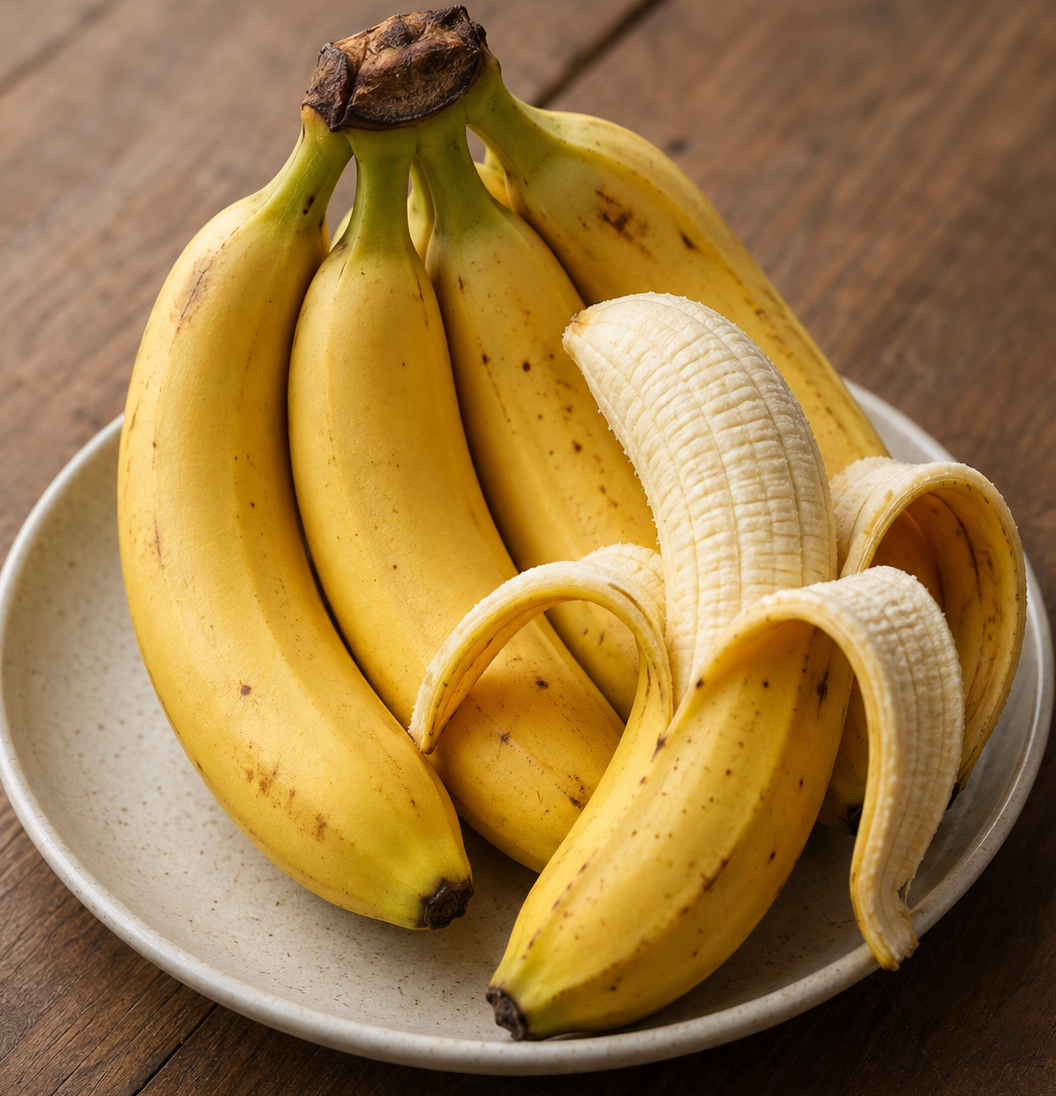
What Happens to Your Body When You Eat a Banana Every Day? Science-Backed Benefits
Bananas are one of the most widely eaten fruits in the world—and for good reason. They are affordable, naturally sweet, portable, easy to digest, and packed with several nutrients the body needs every day. But what actually happens if you eat a banana every day?
Despite some exaggerated claims online, bananas are not a miracle food, and eating one every morning will not suddenly transform your health. However, regularly including bananas as part of a balanced diet can contribute to better nutrition, digestive health, normal muscle and nerve function, blood pressure management, and steady energy.
A medium banana provides roughly 100–110 calories, about 27–28 grams of carbohydrate, around 3 grams of fiber, and approximately 400 milligrams of potassium, although the exact numbers vary depending on the size and variety. Bananas are also a useful source of vitamin B6, magnesium, vitamin C, manganese, and several plant compounds.
Here is what the science suggests may happen when bananas become a regular part of your diet.
1. You Get an Easy Daily Source of Important Nutrients
One of the simplest benefits of eating bananas regularly is nutritional consistency.
Bananas provide several essential vitamins and minerals without requiring preparation. A medium banana contains around 0.4 milligrams of vitamin B6, which represents a meaningful portion of an adult’s daily requirement.
Vitamin B6 is involved in more than 100 enzyme reactions related to metabolism. It also contributes to normal immune function and nervous-system development and function.
Bananas also supply potassium, magnesium, fiber, vitamin C, manganese, and naturally occurring carbohydrates.
Of course, no single fruit contains everything your body needs. A banana should complement—not replace—other fruits, vegetables, whole grains, legumes, nuts, protein-rich foods, and healthy fats.
The real advantage is convenience: eating one banana is an easy way to add another whole plant food to your day.
2. Bananas Can Support Healthy Blood Pressure
Bananas are especially well known for their potassium content.
Potassium is an essential mineral and electrolyte involved in fluid balance, nerve signaling, muscle contraction, and normal heart function.
It also plays an important role in blood pressure regulation.
Higher-potassium foods can help counter some of the effects of dietary sodium. Potassium promotes sodium excretion through urine and helps support normal blood-vessel function. For this reason, diets rich in potassium-containing fruits and vegetables are commonly associated with healthier blood pressure patterns.
That does not mean eating one banana can treat hypertension. Blood pressure is influenced by your overall dietary pattern, sodium intake, body weight, physical activity, genetics, medications, sleep, smoking, alcohol intake, and other factors.
However, replacing highly processed snacks with potassium-rich whole foods such as bananas can be one small component of a heart-healthy diet.

3. Your Digestive System Gets More Fiber
A medium banana contains around 3 grams of dietary fiber.
That may not sound like much, but when combined with fiber from vegetables, whole grains, beans, nuts, seeds, and other fruits, it can help you move closer to your daily fiber needs.
Fiber supports digestive health in several ways. It can increase stool bulk, influence intestinal transit, and provide substrates that interact with bacteria in the colon.
Bananas also contain pectin and other types of carbohydrate whose amounts and properties change as the fruit ripens.
Rather than thinking of bananas as a specific “constipation cure,” it is more accurate to consider them one useful source of fiber within an overall high-fiber diet.
Adequate water intake, physical activity, total fiber consumption, medications, and individual digestive conditions also affect bowel regularity.
4. Less-Ripe Bananas May Feed Beneficial Gut Bacteria
An interesting feature of bananas is that their carbohydrate composition changes dramatically during ripening.
Green and slightly underripe bananas contain more resistant starch. As bananas ripen, much of this starch is converted into sugars, making the fruit softer and sweeter.
Resistant starch behaves somewhat like dietary fiber because it is not completely digested in the small intestine. Some of it reaches the large intestine, where gut microbes can ferment it.
This fermentation produces compounds including short-chain fatty acids, which are an active area of research because of their role in intestinal health and metabolism.
Harvard’s Nutrition Source notes that resistant starch in unripe bananas can act as a food source for beneficial intestinal microbes.
That does not mean greener bananas are automatically “healthier.” Some people prefer ripe bananas because they are softer and easier to digest, while others may benefit from incorporating less-ripe bananas for their higher resistant-starch content.
Both can fit into a healthy diet.
5. Bananas Provide Convenient Energy
Bananas contain naturally occurring carbohydrates, primarily starches and sugars, which the body can use for energy.
This makes them especially practical before physical activity, during a busy morning, or when you need a portable snack.
Unlike candy, cookies, or sugary drinks, a banana provides carbohydrates together with fiber, potassium, vitamin B6, and other nutrients.
Combining a banana with protein or healthy fat can make the snack more balanced and satisfying.
For example:
- Banana with natural peanut or almond butter
- Banana with plain Greek yogurt
- Banana with a handful of nuts
- Sliced banana with oatmeal
- Banana blended into a smoothie containing yogurt, milk, soy milk, or another protein source
For longer-lasting energy, these combinations are generally more balanced than eating carbohydrate alone.
6. They Support Normal Muscle and Nerve Function
Potassium is not only important for blood pressure.
It is also an electrolyte required for normal electrical signaling within the body.
Nerves use electrical signals to communicate, while muscles—including the heart—depend on carefully regulated electrolyte concentrations to contract normally.
Eating potassium-rich foods such as bananas contributes to your overall potassium intake and helps support these normal physiological processes.
However, bananas should not be viewed as a guaranteed remedy for muscle cramps. Exercise-related cramping can have many causes, including fatigue, training intensity, hydration status, electrolyte balance, and individual physiology.
A banana may be a nutritious recovery snack, but it is not a universal treatment for cramps.

7. Bananas May Help You Feel Satisfied Between Meals
Whole fruit can be surprisingly filling relative to its calorie content because it contains water, fiber, and intact plant structure.
A medium banana provides roughly 100 calories while also contributing several grams of fiber.
Fiber slows digestion and can increase feelings of fullness, especially when the fruit is paired with protein or healthy fat.
This can make bananas useful for people trying to reduce their reliance on highly processed snack foods.
Importantly, bananas themselves are not a magical weight-loss food.
Body weight is influenced primarily by long-term energy balance, dietary quality, sleep, physical activity, medical conditions, medications, and many other factors.
There is also no good evidence that bananas inherently cause weight gain when eaten in sensible portions as part of an appropriate diet. Harvard’s Nutrition Source notes that bananas can comfortably fit into healthy weight-management patterns.
8. They Can Help Satisfy a Sweet Tooth Without Added Sugar
A ripe banana tastes very sweet, yet its sugar occurs naturally within the whole fruit.
That distinction matters.
Whole bananas provide fiber, water, minerals, vitamins, and plant compounds along with their naturally occurring sugars. This is nutritionally different from foods in which large amounts of refined or added sugar are concentrated without much fiber or nutritional value.
Using banana as a natural sweetener can therefore be a practical strategy.
Mashed ripe banana works well in oatmeal, yogurt, smoothies, pancakes, and some baked foods. It may allow you to reduce the amount of added sugar used in a recipe.
This does not make banana-based desserts automatically healthy, of course. The complete recipe still matters.
But replacing some added sugar with whole fruit can improve the nutritional quality of certain meals and snacks.
9. Bananas Can Fit Into a Heart-Healthy Eating Pattern
Cardiovascular health depends on your overall diet rather than any single ingredient.
Bananas nevertheless have several characteristics that fit well within heart-healthy dietary patterns: they contain potassium and fiber, are naturally very low in sodium, and contain virtually no saturated fat.
The American Heart Association encourages getting potassium primarily through foods such as fruits and vegetables as part of a broader nutritious diet.
The key phrase is dietary pattern.
Eating a banana every day cannot compensate for a diet dominated by processed meats, refined carbohydrates, excess sodium, sugary drinks, and insufficient vegetables.
But replacing a pastry, candy bar, or similarly processed snack with fruit more often can be a meaningful improvement.
10. Eating a Banana Every Day May Make Healthy Eating Easier
Not every nutritional benefit has to come from a complex biological mechanism.
Convenience matters.
Bananas require no washing, cutting, cooking, refrigeration, or utensils. They are inexpensive in many parts of the world and can easily be taken to work, school, or the gym.
That makes them one of the easiest whole foods to eat consistently.
And consistency is important.
Long-term health is rarely determined by one “perfect” meal. It is shaped by the habits repeated over months and years.
If keeping bananas available helps you choose whole fruit more often instead of highly processed snacks, that simple behavior may be more valuable than many complicated dietary rules.

What About Blood Sugar?
Because bananas are sweet, people with diabetes sometimes believe they must avoid them completely.
That is usually unnecessary.
The American Diabetes Association includes fresh fruit, including bananas, among foods that can be incorporated into a diabetes eating plan. However, fruit contains carbohydrate, so portion size and total carbohydrate intake still matter.
Ripeness also changes the carbohydrate composition of bananas. Less-ripe bananas contain more resistant starch, while very ripe bananas contain a greater proportion of sugars.
People who monitor blood glucose may find it helpful to eat a smaller banana, combine it with protein or healthy fat, and observe their individual glucose response.
Someone using insulin or following a carbohydrate-counting plan should count banana carbohydrates as part of the meal or snack.
There is no universal portion that is ideal for everyone.
Is One Banana Every Day Too Much?
For most healthy people, eating one banana a day is generally a reasonable amount as part of a varied diet.
The bigger question is what the rest of your diet looks like.
If bananas are the only fruit you ever eat, greater variety would be beneficial. Different fruits provide different combinations of fiber, vitamins, minerals, carotenoids, flavonoids, and other phytochemicals.
Rotate bananas with foods such as:
- Berries
- Apples
- Oranges
- Kiwi
- Grapes
- Pears
- Melons
- Peaches
- Mango
- Papaya
Dietary diversity generally provides broader nutrition than relying heavily on any single food.
Who Should Be Careful With Bananas?
Bananas are safe for most people, but there are important exceptions.
People with chronic kidney disease, particularly advanced kidney disease or elevated blood potassium, may need to limit high-potassium foods. Damaged kidneys can have difficulty removing excess potassium from the bloodstream, potentially leading to hyperkalemia.
Certain medications can also affect potassium levels.
The National Institute of Diabetes and Digestive and Kidney Diseases advises people with chronic kidney disease to work with a health professional or dietitian to determine an appropriate potassium intake rather than automatically increasing or restricting potassium-rich foods.
People with diabetes can usually eat bananas, but portion size and carbohydrate management may need to be individualized.
And anyone with a known banana allergy should obviously avoid them.
The Bottom Line
So, what happens if you eat a banana every day?
For most healthy adults, probably nothing dramatic—and that is actually the point.
A daily banana can quietly contribute fiber, potassium, vitamin B6, carbohydrates, and other nutrients to your diet. It may support normal digestion, cardiovascular health, muscle and nerve function, gut microbial activity, and steady energy while providing an easy alternative to many highly processed snacks.
But bananas are not a cure, detox treatment, or shortcut to perfect health.
The greatest benefits come when they are part of a varied diet rich in vegetables, fruits, whole grains, legumes, nuts, seeds, quality protein sources, and healthy fats.
If you enjoy bananas, there is usually no reason to avoid them simply because they contain carbohydrates or natural sugar.
For most people, eating one a day can be a simple, nutritious—and delicious—habit.
Sources
- Harvard T.H. Chan School of Public Health, The Nutrition Source: Bananas
- National Institutes of Health Office of Dietary Supplements, Potassium Fact Sheet
- National Institutes of Health Office of Dietary Supplements, Vitamin B6 Fact Sheet
- American Heart Association, Potassium and Blood Pressure
- American Diabetes Association, Best Fruit Choices for Diabetes
- National Institute of Diabetes and Digestive and Kidney Diseases, Healthy Eating for Adults With Chronic Kidney Disease
Disclaimer: This article was created with AI assistance and edited by a human for accuracy and clarity.