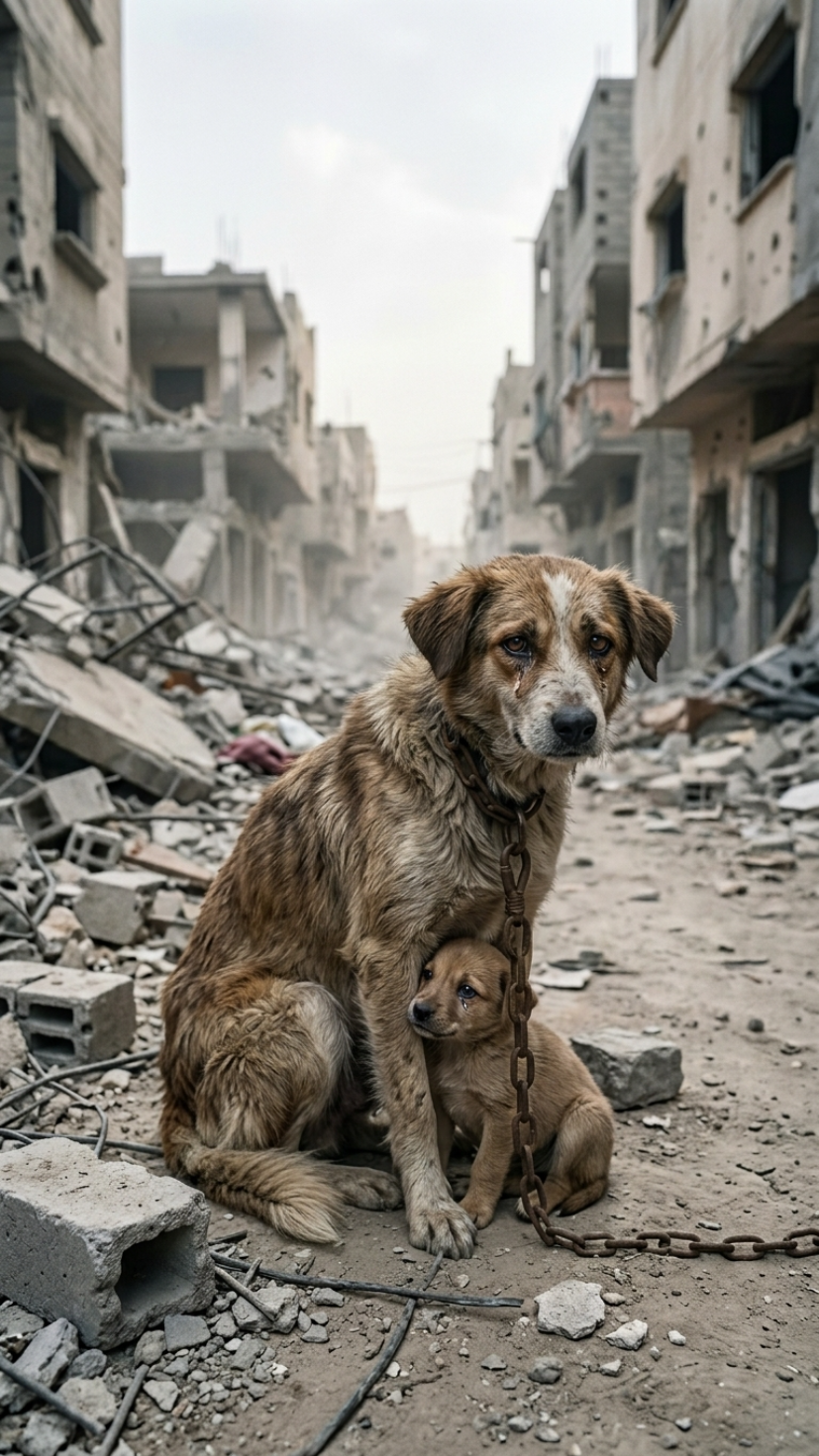
A Mother’s Instinct in the Midst of Ruin: Image from Gaza Captures Global Attention Amid the widespread destruction of Gaza’s conflict zones, a single image is drawing international attention —not of soldiers or weapons, but of a starving mother dog and her puppy clinging to her for safety. The photograph, which has circulated widely on social media in recent days, shows the two animals sitting
among collapsed concrete and scattered debris.
The mother, visibly malnourished with her ribs and spine sharply defined, appears exhausted. Around her neck is a heavy metal collar with a chain trailing across the rubble. Yet despite her condition, she remains seated, holding her small puppy close against her body. The puppy, equally frail, is curled tightly into its mother’s chest. Its posture suggests both fear and dependence, seeking warmth and protection in an environment that offers neither. Observers have been particularly struck by the mother’s eyes—described by many as filled with sorrow and urgency—capturing a moment that feels both deeply personal and universally understood.
While the exact circumstances of the animals remain unclear, the image reflects a broader and often overlooked consequence of armed conflict: the suffering of animals left behind. In war zones, domestic animals frequently become displaced, injured, or abandoned as families flee violence. With infrastructure damaged and access to food and water severely limited, survival becomes a daily struggle. Animal welfare organizations have long warned about the humanitarian dimensions of such crises extending beyond human populations. Rescue teams, often operating under dangerous conditions, attempt to locate and assist animals trapped in affected areas.
However, limited resources and ongoing security risks make these efforts difficult to sustain at scale. What makes this image particularly powerful is its portrayal of instinct and resilience. Even in extreme deprivation, the mother dog continues to protect her young—an act that resonates across species. Experts note that maternal behavior in animals is deeply ingrained, often persisting even when survival itself is uncertain. The photograph has sparked renewed discussion online about the need for greater attention to animal welfare in conflict response efforts.
Some users have called for increased support for rescue initiatives, while others have emphasized the symbolic weight of the image as a reminder of shared vulnerability. In a landscape defined by destruction, the image offers a quiet but profound message: that even in the harshest conditions, the drive to protect and care for another life endures.